Best Wellness Retreats for Seniors: 2026 Longevity Guide
The institutionalization of aging has undergone a profound structural metamorphosis as the mid-2020s witness a global pivot toward “Biological Longevity Management.” In 2026, the traditional concept of retirement is being replaced by an era of “Adaptive Vitality,” where the objective is no longer merely the absence of disease but the optimization of the “Healthspan.” This cultural shift has elevated the role of specialized restorative environments, transforming them from simple leisure destinations into sophisticated clinical and social interventions designed to address the specific physiological and cognitive requirements of the aging population.
Navigating the landscape of restorative travel for older adults requires a departure from “Age-Agnostic” thinking toward “Gerontological Precision.” The challenge for the modern seeker or their advocates is to distinguish between a “Leisure-First” resort that happens to accommodate older guests and a “Transformation-Oriented” sanctuary that proactively engineers its environment for mobility, cognitive engagement, and metabolic resilience. A failure to recognize this distinction leads to “Environmental Friction,” where the very space intended for healing becomes a source of physical or psychological stress due to inadequate infrastructure or insensitive programming.
Furthermore, the integration of “Geroscience” into the wellness sector has introduced a layer of technical rigor that demands a new vocabulary for the consumer. We are no longer merely discussing “relaxation” or “spa treatments”; we are auditing “Neuroplasticity Stimuli,” “Sarcopenia Prevention,” and “Social Connectivity Thresholds.” This maturation of the field reflects a broader societal realization: that a well-governed elderhood is a high-performance state that requires intentional environmental scaffolding. This editorial reference provides the intellectual framework necessary to evaluate the diverse global offerings and establish a definitive path toward genuine restorative depth.
Understanding “best wellness retreats for seniors.”
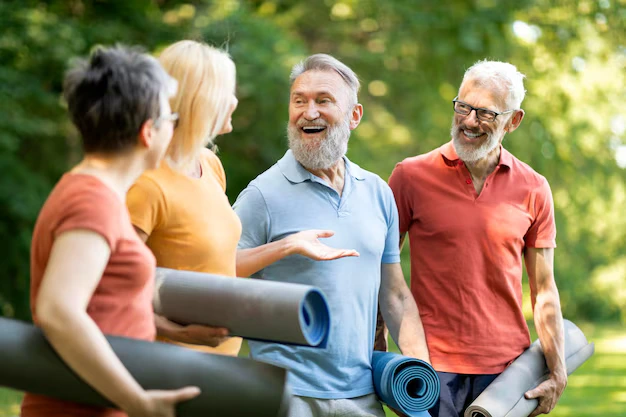
To identify the best wellness retreats for seniors is to move beyond the reductive view that senior wellness is a synonym for “gentleness.” In a professional and analytical context, a senior wellness plan is a “Bio-Psychosocial Intervention.” It acknowledges that while the biological baseline may be changing, the capacity for adaptation—termed “Plasticity”—remains a potent force well into the ninth and tenth decades of life.
Multi-Perspective Explanation
From a Physiological Perspective, these retreats are characterized by “Mechanical Empathy.” They seek to provide high-intensity benefits (such as cardiovascular conditioning or bone density stimulation) while minimizing joint impact and recovery time. Operationally, the value lies in “Universal Design”—the creation of spaces where the environment itself facilitates movement, such as gradual inclines, ergonomic seating, and intuitive lighting that respects the changing visual acuity of the aging eye. From a Cognitive Perspective, the hallmark of an elite plan is “Neurological Novelty”—the provision of new skills, languages, or social dynamics that challenge the brain to form new synaptic connections.
Oversimplification Risks
The most significant risk in the current market is “The Infantilization of Aging.” A facility may offer “Senior Yoga” or “Crafting Circles,” but if these lack “Metabolic Demand” or “Intellectual Depth,” they remain mere “Time-Filling Products.” An oversimplified view fails to distinguish between “Passive Care” and “Active Empowerment.” Furthermore, the “Aesthetic Bias” often leads families to believe that a retreat is valid simply because it is luxurious, ignoring the “Clinical Quality” of the staff or the “Emergency Readiness” of the location.
Contextual Background: From Convalescence to Active Longevity
The history of the senior-focused retreat has evolved from the “Rest Cures” of the early 20th century—which emphasized radical inactivity and segregation—to the “Integrative Longevity” models of 2026. Historically, these spaces were clinical sanatoriums designed to manage decline rather than promote growth.
By the late 20th century, the “Active Adult” movement began to challenge the “Decline Narrative,” yet it often focused on purely social or athletic metrics. Today, we have entered the era of “Functional Optimization,” where the retreat serves as a “Learning Laboratory” for the individual. This shift reflects a move away from “Symptom Management” toward “Systemic Resilience”—the idea that the aging body should be challenged within safe parameters to maintain its functional independence.
Conceptual Frameworks for Gerontological Wellness
Strategic seekers use specific mental models to evaluate the “Structural Integrity” of a wellness program for older adults.
1. The “Compression of Morbidity” Model
This framework posits that the goal of wellness is to shorten the period of illness at the end of life into as short a timeframe as possible. A retreat is evaluated by its ability to maximize the “Vital Years,” focusing on preventative metabolic health and mobility.
2. The “Social Convoy” Framework
Aging often involves the shrinking of social circles. This model assesses whether a retreat successfully creates a “Micro-Community” that provides peer-to-peer support and intergenerational engagement, combating the “Inflammatory Stress” associated with social isolation.
3. The “Environmental Docility” Hypothesis
This theory suggests that as a person’s functional capacity decreases, the influence of the environment on their behavior increases. A retreat that follows this logic minimizes “Navigational Load,” ensuring that the physical layout does not prevent the guest from participating in the activities offered.
Key Categories of Restorative Interventions and Trade-offs
Identifying the ideal environment requires an audit of “Functional Priority.”
| Category | Primary Mechanism | Significant Trade-off | Ideal Use Case |
| Medical Longevity | Diagnostic screening; Hormonal optimization. | Clinical atmosphere; High cost. | Chronic disease prevention. |
| Cognitive Resilience | Brain training; Artistic immersion. | Mentally exhausting. | Early-stage memory support. |
| Mobility-Focused | Hydrotherapy; Guided resistance. | Physically demanding. | Sarcopenia; Joint stiffness. |
| Nature-Immersion | Forest bathing; Low-impact hiking. | Limited emergency access. | Stress reduction; Awe. |
| Dietary/Metabolic | Anti-inflammatory nutrition; Gut health. | Highly restrictive menus. | Digestive health; Weight. |
| Social/Educational | Lectures; Group workshops. | Low individual “Quiet Time.” | Combating loneliness. |
Detailed Real-World Scenarios and Decision Logic
The “Post-Orthopedic” Recovery
A 72-year-old who has undergone a knee replacement and feels a loss of confidence in their movement.
-
The Decision Logic: Selection of a “Mobility-Focused” plan with high-frequency hydrotherapy.
-
Analysis: Simple “walking retreats” might be too high-impact. They need the buoyancy of water to perform “Strength Labor” without damaging the surgical site.
-
Outcome: The individual regains “Proprioceptive Confidence,” allowing them to return to their daily environment without the fear of falling.
The “Transitional” Retiree
A 68-year-old who has just left a high-stress career and feels a profound sense of “Identity Void.”
-
The Decision Point: A “Medical-Luxury” spa vs. a “Service-Based/Educational” retreat.
-
Outcome: They chose the Educational retreat. While a spa provides relaxation, it does not address the “Cognitive and Social Void.” They need a “Purpose-Driven” environment where they can learn a new skill or contribute to a project.
Planning, Cost, and Resource Dynamics
The “Economic Reality” of senior wellness is that “Safety and Supervision” are the primary cost drivers.
Senior Wellness Resource Tiers (2026 Estimates)
| Tier Level | Weekly Cost (Est.) | Supervision Quality | Facility Focus |
| Clinical Sanctuary | $8,000 – $15,000 | MDs, Geriatricians, RNs. | High-tech diagnostics. |
| Active Boutique | $4,500 – $8,000 | Certified Trainers; Chefs. | Aesthetic; Ergonomic. |
| Community Hub | $2,000 – $4,000 | Group Leaders; Local Staff. | Social; Accessible. |
| Nature Outpost | $1,500 – $3,000 | Guides: Basic Medical. | Solitude; Simple living. |
Tools, Strategies, and Support Systems
A rigorous strategy for senior wellness involves a “Biological and Environmental Stack”:
-
Biometric Monitoring: The use of wearable tech (Oura, Whoop, etc.) to track “Recovery-to-Stress” ratios in real-time.
-
Anti-Inflammatory Nutritional Architectures: Focusing on high-protein, phytonutrient-dense menus to combat “Inflammaging.”
-
Low-Impact Resistance Training: Utilizing pneumatic or water-based resistance to maintain “Muscle Mass” (the organ of longevity).
-
Cognitive Novelty Protocols: Structured “Brain-Challenging” tasks like learning a new language or complex craft.
-
Circadian Lighting Systems: Enhancing “Melatonin/Cortisol” cycles to improve sleep quality in aging populations.
-
Social Engineering: Curated “Table Placement” and group dynamics that prevent social withdrawal.
-
The “Life Review” Journal: A structured psychological tool to help seniors integrate their past experiences and find “Ego Integrity.”
Risk Landscape and Failure Modes
The “Taxonomy of Senior Wellness Risk” includes:
-
The “Overtraining” Hazard: Pushing an older adult into high-intensity activities without adequate “Recovery Windows,” leading to injury or burnout.
-
The “Isolation” Mode: A facility that is physically accessible but socially “Chilly,” leading the guest to stay in their room and miss out on “Connectivity Dividends.”
-
The “Medical Gaps” Risk: A retreat that offers intense wellness protocols but lacks “Advanced Cardiac Support” in a remote location.
-
The “Cognitive Overload” Failure: Providing too many complex choices or technical requirements, leading to “Anxiety and Withdrawal.”
Governance, Maintenance, and Long-Term Adaptation
A successful retreat is a “Metabolic and Behavioral Pivot.”
-
The “Home-Integration” Plan: A 30-day follow-up program that translates retreat habits (like daily movement or dietary shifts) into the home environment.
-
The “Quarterly Maintenance” Audit: A virtual check-in with a longevity coach to adjust the individual’s “Health Stack” based on changing seasonal needs.
-
Governance Checklist:
-
Has the “Personalized Movement Plan” been updated for home use?
-
Is there a “Social Connectivity” goal for the next 90 days?
-
Have the “Biological Markers” (blood pressure, grip strength) been recorded?
-
Is the home environment audited for “Fall Prevention”?
-
Measurement, Tracking, and Evaluation
How do you measure the “Evolution of the healthspan”?
-
Leading Indicators: “Grip Strength” (a proxy for overall muscle health); “Gait Speed”; “Heart Rate Variability” (HRV).
-
Qualitative Signals: “Spontaneous Engagement” in social activities; “Subjective Vitality” scores; “Reduction in Joint Pain.”
-
Documentation Examples: The “Functional Independence Log”—a weekly review of how many ADLs (Activities of Daily Living) the individual performs with ease.
Common Misconceptions and Oversimplifications
-
“Seniors Need to Rest”: False. Seniors need “Appropriately Challenging Activity” to maintain systemic function.
-
“It’s Only for the Wealthy”: False. While luxury options exist, “Wellness Principles” (walking, community, nutrition) can be applied in various tier levels.
-
“Wellness is Selfish”: False. Maintaining independence is an “Act of Service” to one’s family and community.
-
“It’s Too Late to Start”: False. Research shows that strength training and cognitive engagement yield results even in those over 90.
-
“All Senior Retreats are Assisted Living”: False. These are high-performance environments for active, searching individuals.
-
“Nature is Dangerous for the Elderly”: False. Nature provides “Cognitive Restoration” and “Sensory Stimulation” essential for mental health.
Ethical and Practical Considerations
In 2026, the primary ethical challenge is “Ageist Gatekeeping.” As the best wellness retreats for seniors become more technically advanced, there is a risk of excluding those with minor physical or cognitive impairments from the most effective interventions. Practically, the individual must consider “Economic Integrity.” A plan that exhausts one’s retirement savings for a 10-day high is not wellness; it is a distraction. True depth should lead to “Sustainability” and “Peace of Mind.”
Conclusion
The architecture of a resilient elderhood is built on “Intentional Interiority and Physical Agency.” By approaching the selection of a wellness immersion with an analytical and editorial mind, the individual ensures that their “Late-Life Pivot” leads to a permanent shift in “Quality of Life.” Success in 2026 is found in the “Adaptive Flexibility” that allows one to remain curious and capable in a changing world. Ultimately, the best retreat is the one that allows the senior to return to their community not as a “patient,” but as an “elder”—a source of wisdom and vitality.