Luxury Spa Retreats USA: The 2026 Editorial Reference
The commodification of tranquility has reached a zenith in the American hospitality sector, where the “Spa” has transitioned from a peripheral hotel amenity to a primary destination of high-stakes physiological intervention. In the contemporary era, the distinction between mere pampering and therapeutic sovereignty has become the defining line of the luxury market. As high-net-worth individuals navigate an environment of “Digital Over-Stimulation” and “Decision Fatigue,” the requirement for a sanctuary has evolved into a requirement for a controlled, sensory-optimized ecosystem.
This maturation of the wellness industry reflects a systemic shift toward “Longevity Architecture.” No longer satisfied with the superficial application of oils or the reprieve of a sauna, the modern seeker views luxury spa retreats in the USA as nodes in a broader life-governance strategy. These institutions are now expected to function as “Biological Safe-Havens,” where the intersection of ancestral healing traditions and modern clinical precision provides a measurable offset to the allostatic load of professional and social life.
To evaluate these sanctuaries with editorial rigor, one must look beyond the marble facades and infinity pools. The true value of a flagship retreat lies in its “Interventional Depth”—the degree to which the facility can successfully alter a participant’s autonomic nervous system baseline. This necessitates a sophisticated interrogation of staff-to-guest ratios, the “Bio-Regional” integrity of treatments, and the facility’s ability to maintain a “Temporal Buffer” that protects the guest from the velocity of the outside world. This editorial reference serves as the definitive framework for navigating this high-authority landscape.
Understanding “luxury spa retreats usa”
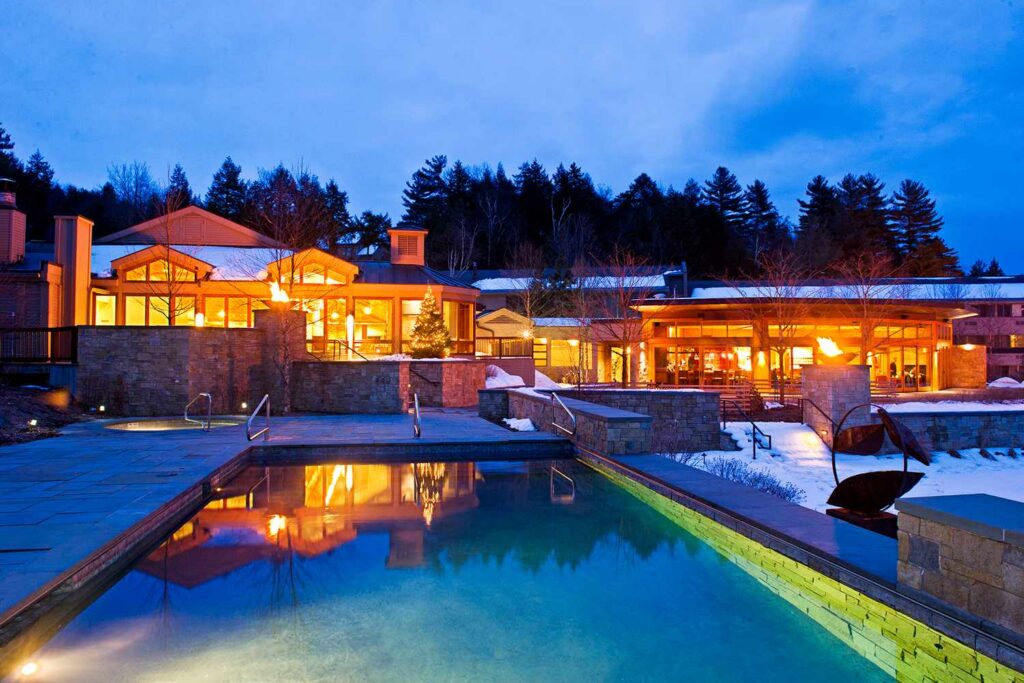
The term luxury spa retreats usa denotes a specific category of “Destination Wellness” where the environment is engineered for total sensory containment. In an analytical sense, these are not merely businesses; they are “Protocol Environments” designed to facilitate a specific psychological and physiological transition.
Multi-Perspective Explanation
From a Somatic Perspective, luxury is defined by the “Absence of Friction.” This includes the acoustic design of treatment rooms that neutralize low-frequency vibrations and the implementation of “Circadian Lighting” that aligns with the body’s internal clock. From an Operational Perspective, the “Best-in-Class” retreats are those that prioritize “Continuity of Care,” where a single lead therapist or wellness concierge oversees the guest’s entire journey to ensure that the cumulative effect of treatments is synergistic rather than disjointed. From an Aesthetic Perspective, the US market focuses on “Place-Based Healing,” leveraging the rugged isolation of the American West or the maritime rhythms of the Atlantic coast as active therapeutic agents.
Oversimplification Risks
A frequent error in assessing this market is the “Amenity Fallacy,” assuming that the more gadgets a spa possesses (cryotherapy chambers, hyperbaric pods), the more “Advanced” it is. Technology without a governing philosophy is merely a distraction. Furthermore, the “Hospitality-First” trap can be deceptive; a facility may offer 5-star service while lacking the “Pedagogical Depth” required to teach a guest how to maintain their newly found equilibrium once they return to a high-stress environment.
Deep Contextual Background: The Evolution of the American Sanctuary
The American concept of the “Spa” has undergone a radical transformation from the “Water-Cure” establishments of the 19th century, which were often austere and clinical, al to the “Hedonistic Wellness” of the late 20th century, and finally to the “Bio-Hacking Sanctuaries” of 2026. Historically, the US lacked the deep-seated “Spa Culture” of Central Europe or the “Onsen” traditions of Japan, leading to a period of “Identity Fragmentation” where American spas were often derivative.
However, the 21st century has seen the rise of “The American Synthesis.” This model combines the high-efficiency diagnostic tools of the Silicon Valley longevity movement with the spacious, high-service hospitality that defines American luxury. The modern flagship retreat now functions as a “Longevity Laboratory,” where guests are treated as “High-Performance Assets” that require periodic recalibration. This systemic evolution represents a shift from “Escape” to “Optimization.”
Conceptual Frameworks for Evaluative Discernment
Strategic travelers utilize specific mental models to audit the integrity of a retreat before committing their most finite resource: time.
1. The “Signal-to-Noise” Framework in Wellness
This model evaluates how much of a retreat’s offering is “High-Signal” (evidence-based, high-impact) versus “Noise” (trend-based, low-impact marketing). A luxury facility that prioritizes 90-minute “Symphonic Bodywork” over 15-minute “Sheet Masks” is demonstrating a high signal-to-noise ratio.
2. The “Nervous System Safety” Audit
In this framework, the luxury of a space is measured by its “Neuro-Architecture.” Does the layout of the facility allow for “Peripheral Privacy”? Are there “Low-Stimulus Zones” that facilitate the transition from the sympathetic (fight or flight) to the parasympathetic (rest and digest) nervous system?
3. The “Biophilic Integration” Model
This assesses the degree to which the local environment is integrated into the spa’s “Pharmacopeia.” A retreat in Sedona that uses locally sourced volcanic clay and high-desert botanicals is more “Sovereign” than one using generic, mass-produced luxury brands from Europe.
Key Categories and Jurisdictional Variations
The American landscape offers diverse “Ecological Interventions” that dictate the tone of the recovery.
| Category | Primary Modality | Significant Trade-off | Decision Logic |
| High-Desert (AZ/UT) | Aridity; Heat; Stillness. | Dehydration risk vs. Clarity. | Best for “Mental De-cluttering.” |
| Coastal (CA/FL) | Hydrotherapy; Marine Ions. | Humidity vs. Vitality. | Best for “Sensory Re-awakening.” |
| Mountain (CO/MT) | Altitude; Cold; Forest. | Hypoxia risk vs. Resilience. | Best for “Metabolic Reset.” |
| Urban Sanctuary (NY/CHI) | High-tech Recovery; Speed. | Ambient noise vs. Accessibility. | Best for “Short-Term Recalibration.” |
| Forest/Hudson (NY/OR) | Terpenes; Shade; Softness. | Seasonal damp vs. Grounding. | Best for “Nervous System Recovery.” |
Detailed Real-World Scenarios and Decision Logic
The “Burnout” Emergency
A high-level executive is experiencing “Anhedonia” (the inability to feel pleasure) and chronic insomnia.
-
The Decision Logic: Choosing a “Medical-Holistic” hybrid in the Arizona desert.
-
Analysis: The dry heat and stark landscape provide a “Sensory Reset” that breaks the loop of urban stimulus.
-
Outcome: The use of “Flotation Therapy” and “Cranial-Sacral Work” allows the executive to bypass the cognitive mind and address the burnout at a “Somatic Level.”
The “Longevity” Audit
A 50-year-old seeking to optimize their “Health-Span” for the next decade.
-
The Decision Point: A luxury spa in South Florida focused on “Regenerative Medicine.”
-
Failure Mode: Choosing a “Pampering” resort that lacks diagnostic capabilities.
-
Analysis: Optimization requires “Data.” A retreat with blood analysis, DEXA scans, and metabolic tracking is the only logical choice.
Planning, Cost, and Resource Dynamics
The “Economic Reality” of luxury wellness is that “Frictionless Space” is the most expensive commodity in the US market.
Luxury Spa Investment Architecture (2026)
| Tier | Daily All-In Cost | Primary Resource | Operational Focus |
| The Flagship | $2,500 – $5,000+ | 1:1 Care; Private Villa. | Radical Transformation. |
| The Boutique | $1,200 – $2,200 | Specialized Niche; Local. | Specific Modality Focus. |
| The Destination | $800 – $1,500 | Shared Facilities: High-End. | Broad Wellness Experience. |
| The Day-Asset | $400 – $700 | Non-residential; Urban. | Immediate Symptom Relief. |
Tools, Strategies, and Support Systems
To ensure “Transitional Integrity,” a guest should utilize an “Operational Stack”:
-
The “Pre-Arrival” Intake Audit: Insisting on a 30-minute consultation with the lead therapist two weeks before arrival to “Level-Set” expectations.
-
Analog Sabbatical: Utilizing the spa’s “Tech-Safe” or “Valet” for all mobile devices to prevent “Digital Leakage” into the recovery zone.
-
The “Therapist-Matching” Strategy: Requesting a specific gender or experience level based on the “Somatic Goal” (e.g., deep tissue vs. subtle energy work).
-
Hydration Sovereignty: Monitoring mineral intake; luxury spas often provide “Structured Water” or “Electrolyte Infusions” to offset the effects of high-intensity heat treatments.
-
The “Buffer Day” Strategy: Booking the retreat so that it ends on a Friday, allowing for a 48-hour “Integration Period” at home before returning to work.
-
Somatic Journaling: Keeping a physical record of “Body-State” changes to identify which specific treatments (e.g., Cold Plunge vs. Infrared) provide the highest ROI.
Risk Landscape and Failure Modes
-
The “Honeymoon” Crash: Experiencing a massive high at the retreat only to fall into a deeper depression once the “Container of Luxury” is removed.
-
The “Over-Treatment” Syndrome: Booking too many aggressive services (peels, deep tissue, hot/cold) back-to-back, which can overwhelm the lymphatic system and cause a “Wellness Hangover.”
-
The “Inauthentic” Extraction: Facilities that “Apropriate” indigenous practices (e.g., a “Shamanic Ceremony” in a hotel basement) without proper lineage or respect, leading to a shallow and ethically compromised experience.
Governance, Maintenance, and Long-Term Adaptation
A luxury retreat is a “Capital Expenditure” on one’s biology.
-
The “90-Day Audit”: Reviewing whether the “Clarity” found at the retreat has translated into structural changes in one’s daily routine.
-
The “Maintenance Ritual”: Identifying the one sensory element from the retreat (a specific essential oil, a breathing technique, or a lighting setup) and recreating it at home to “Anchor” the nervous system.
Measurement, Tracking, and Evaluation of Efficacy
How do you measure the value of a $10,000 week?
-
Leading Indicators: A sustained drop in Resting Heart Rate (RHR); an increase in Heart Rate Variability (HRV); improved “Sleep Architecture.”
-
Qualitative Signals: A reduction in “Internal Monologue Velocity”; a restoration of the “Sense of Wonder”; and the ability to respond to stressors with “Analytical Calm” rather than “Visceral Panic.”
Common Misconceptions and Oversimplifications
-
“Luxury is Always Healthy”: False. High-end food and expensive wine are “Luxuries” that can actively undermine “Wellness.”
-
“I Need to Lose Weight Before I Go”: False. The retreat is the “System” that facilitates the change, not the “Reward” for it.
-
“Saunas are Just for Sweating”: False. In a luxury context, heat therapy is a “Hormetic Stressor” used for cardiovascular training and protein folding.
-
“More Massage is Better”: False. The lymphatic system requires time to process the metabolic waste released during deep bodywork.
-
“I Can’t Afford a Week”: Solution: Many luxury flagships offer “Intensive Weekends” that provide 80% of the benefit in 30% of the time.
Conclusion
The pursuit of excellence in the American spa market is a pursuit of “Internal Sovereignty.” By treating luxury spa retreats USA as critical infrastructure for the maintenance of the human machine, the individual moves from a state of “Reactive Survival” to “Proactive Flourishing.” In 2026, the greatest luxury is not the gold-leaf facial or the silk robe; it is the “Silence of the Mind” and the “Resilience of the Body.” Ultimately, the best retreat is the one that equips you with the “Internal Sanctuary” required to remain composed in an uncomposed world.