Luxury Nature Retreats USA: The 2026 Authority Reference
In the contemporary hierarchy of experience, luxury has undergone a profound structural shift from the “Gilded Enclosure” to the “Sanctuary of Reciprocity.” In the United States, this transition is most visible at the intersection of high-tier hospitality and ecological stewardship. By 2026, the discerning traveler is no longer seeking a superficial bypass of the natural world through climate-controlled glass; they are pursuing “Somatic Re-wilding,” a deliberate, high-authority immersion that utilizes the American wilderness as a primary therapeutic medium. This editorial analysis explores the mechanics of these environments, moving beyond the “Glamping” vernacular to define the rigorous standards of the modern flagship retreat.
The American landscape, with its vast jurisdictional diversity from the high-arid mesas of the Southwest to the dense, damp biomes of the Pacific Northwest, provides a unique laboratory for “Geographic Interventions.” The defining characteristic of luxury nature retreats USA is not merely the provenance of the organic linens or the farm-to-table culinary programs, though these remain baseline metrics. Rather, it is the resort’s ability to manage the interface between “Bio-metric Precision” and “Ancestral Resonance.” It is a move toward “Precision Wellness,” where the geography itself is prescribed to counteract specific urban pathologies such as “Hurry-Sickness” and “Cognitive Fragmentation.”
Understanding “luxury nature retreats usa”
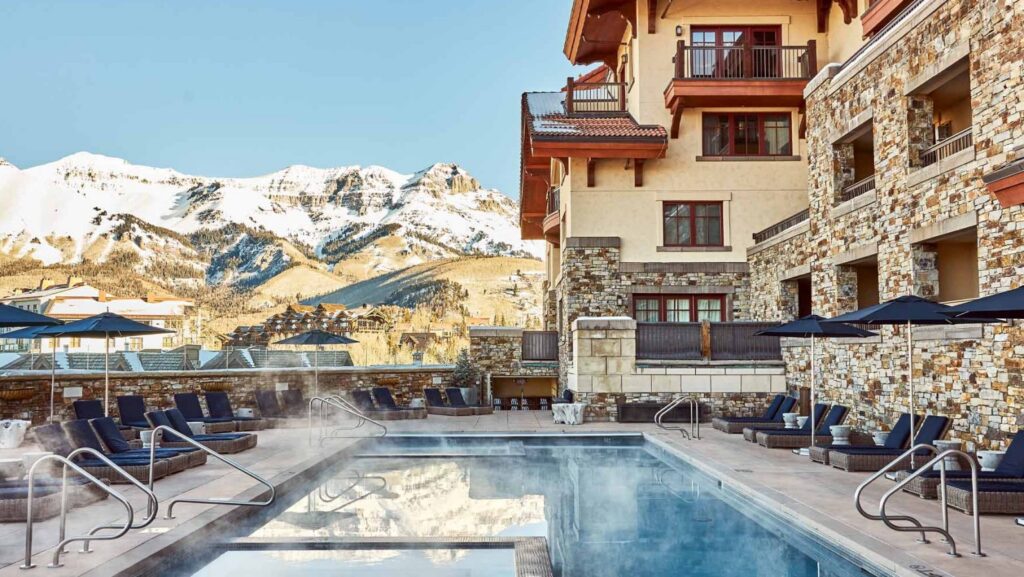
To define the luxury nature retreats USA is to engage with a multi-layered taxonomy of health and self-governance. In a professional editorial context, “Luxury” is not an indicator of excess, but a metric of “Atmospheric Purity” and “Interventional Integrity.” It describes a facility’s capacity to provide a frictionless environment where the practitioner’s primary task is internal observation and environmental connection.
Multi-Perspective Explanation
From a Physiological Perspective, luxury is defined by “Bio-Regional Alignment”—the intentional use of local minerals, flora, and thermal gradients to enhance recovery. From a Pedagogical Perspective, it involves access to “High-Authority Guides” who possess deep scientific or traditional training in forest medicine and land stewardship. From a Logistical Perspective, it requires “Total Sensory Containment,” where the acoustic and visual environments are engineered to prevent “Stimulus Leakage” from the outside world.
Oversimplification Risks
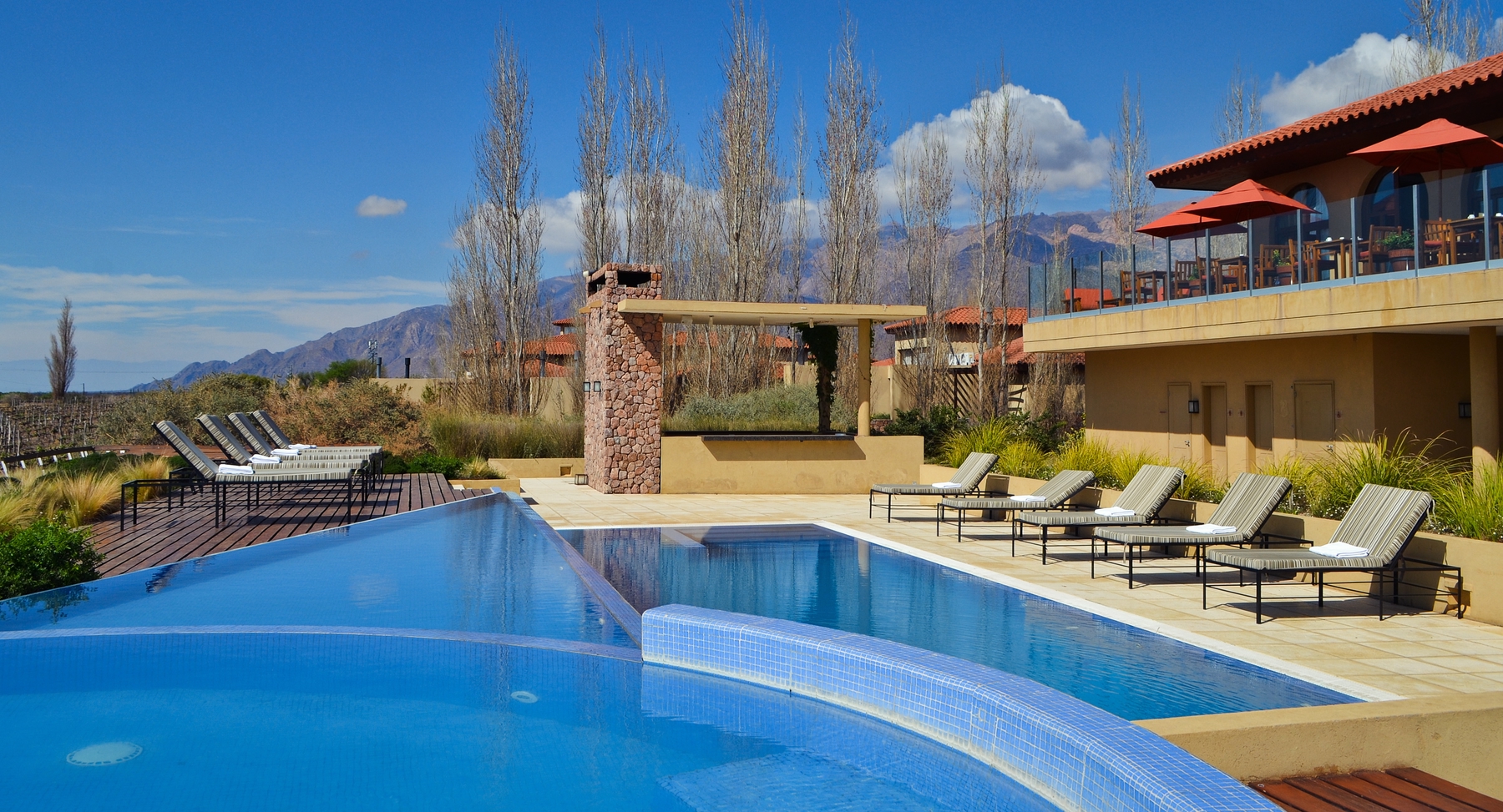
The primary risk for the auditor is the “Aesthetic Trap”—assuming that a beautiful social media presence equates to deep ecological instruction. A retreat may offer a stunning infinity pool while providing only surface-level, “nature-adjacent” activities that fail to trigger genuine parasympathetic down-regulation. Furthermore, the “Sustainability Fallacy” can be deceptive; true luxury in 2026 requires “Regenerative Governance,” where the retreat actively improves the biodiversity of its local ecosystem rather than merely minimizing its negative impact.
Contextual Background: The Evolution of the American Sanctuary
The American concept of a nature retreat has shifted from the “Ascetic Ideal” of the early 1900s—where spiritual depth was often associated with physical hardship—to the “Scientific Synthesis” of today. Historically, the movement was defined by the “Sanatoriums” and “Great Camps” of the Adirondacks, where the elite sought relief from the “Industrial Miasma” of the Gilded Age.
By the mid-20th century, the “Motel Culture” diluted the intimacy of these experiences. However, the post-2020 era triggered a “Biophilic Renaissance.” Modern flagship retreats now utilize “Somatic Architecture”—buildings designed to facilitate different types of nature connection, from “Star-Gazing Chambers” in the desert to “Tree-Top Ateliers” in the forest. This evolution reflects a broader trend toward “Precision Somatics,” where the wilderness is utilized as a specific tool for “Nervous System Governance.”
Conceptual Frameworks for Evaluative Discernment
Strategic selection of a retreat requires mental models that bypass marketing copy to reveal the underlying utility of the experience.
1. The “Hormetic Load” Framework
This model evaluates a retreat based on its use of “Positive Stress.” Experiences that utilize cold-water immersion, heat stress (sauna), or high-altitude movement are designed to trigger “Cellular Autophagy” and immune-system resilience. The limit of this framework is “Recovery Capacity”—if the stress exceeds the participant’s ability to repair, the intervention becomes counterproductive.
2. The “Nervous System Triage” Model
This assesses whether an experience is designed for “Up-regulation” (increasing energy and metabolic rate) or “Down-regulation” (calming the mind and lowering cortisol). Success depends on matching the “Intervention Type” to the participant’s current “Basal State.” A burnout victim needs a different triage than a stagnant athlete.
3. The “Biophilic Integration” Matrix
This model evaluates how well a resort leverages its “Jurisdictional Geography.” A facility in the Sonoran Desert that uses locally sourced volcanic clay is utilizing its “Place-Based Intelligence” more effectively than one using generic, globalized products.
Key Categories and Jurisdictional Variations
The American landscape offers diverse “Climatic Interventions” that dictate the tone of the retreat.
| Category | Primary Philosophy | Significant Trade-off | Strategic Utility |
| High-Desert (AZ/UT) | Aridity & Stillness. | Dehydration risk vs. Clarity. | Mental de-cluttering. |
| Coastal (CA/ME) | Fluidity & Vitality. | Humidity vs. Sensory Awakening. | Physical rejuvenation. |
| Mountain (CO/MT) | Resilience & Altitude. | Hypoxia risk vs. Fortitude. | Metabolic/Cardio reset. |
| Forest (NY/OR) | Grounding & Biophilia. | Seasonal damp vs. Calm. | Nervous system recovery. |
| Glacier (AK/WA) | Primordial Isolation. | Extreme cold vs. Perspective. | Existential recalibration. |
Detailed Real-World Scenarios and Decision Logic
The “Chronic Stress” Recovery
A 40-year-old litigation attorney is experiencing “Hyper-Vigilance” and shallow breathing.
-
The Decision Logic: Choosing a “Down-regulating” forest retreat in the Hudson Valley over a high-intensity mountain camp in Colorado.
-
Analysis: The litigation attorney’s nervous system is already overtaxed. High-altitude exertion would only add “Mechanical Stress.” A forest-based restorative retreat provides the “Parasympathetic On-ramp” needed for true recovery.
-
Outcome: The attorney learns to down-regulate their heart rate through forest-bathing (Shinrin-yoku) protocols.
The “Cognitive Stagnation” Triage
A creative director feels their ideas have become “Formulaic” and repetitive.
-
The Decision Point: A “High-Contrast” desert retreat in Moab, Utah.
-
Failure Mode: Choosing a “Relaxation-Only” beach spa.
-
Analysis: Stagnation is often a symptom of “Sensory Familiarity.” The desert’s extreme geology and silence force a “Cognitive Re-indexing.”
-
Outcome: Restoration of “Strategic Perspective” through forced simplicity.
Planning, Cost, and Resource Dynamics
The “Economic Reality” of luxury nature retreats uUSAis that “Uninterrupted Attention” and “Pristine Silence” are the most expensive commodities in 2026.
American Nature Retreat Investment Tiers (2026 Estimates)
| Tier | Investment (Weekly) | Primary Value Driver | Operational Context |
| Boutique/Eco | $3,500 – $6,000 | Small groups; Local expertise. | High-quality community. |
| Flagship/Integrative | $9,000 – $18,000 | Multi-modal; Private villas. | Systemic health resets. |
| Private/Secluded | $25,000 – $50,000+ | Total isolation; Custom staff. | High-profile/Complex needs. |
| Urban Sanctuary | $500 – $1,200 | Acute access; Tech-enabled. | Short-term recalibration. |
Tools, Strategies, and Support Systems
To maximize the ROI of a luxury nature experience, one should deploy a “Systemic Stack”:
-
The “Pre-Arrival” Taper: 14 days before arrival, reducing caffeine and blue-light exposure to prevent “Withdrawal Overload” during the first 48 hours.
-
Analog Journaling: Using a physical notebook to record “Somatic Signals”—physical sensations—to help anchor the experience in the body.
-
The “Integration” Buffer: Blocking 72 hours of “Blank Space” in the calendar post-retreat. Returning to a board meeting directly from the wilderness causes “Nervous System Whiplash.”
-
Baseline Bio-Metrics: Conducting a blood panel and HRV check 30 days before arrival to have a data-driven comparison point.
-
Environmental Triage: Selecting a center whose geography matches your “Elemental Needs” (e.g., damp/forest for heat-dominant stress).
-
The “Pedagogical” Inquiry: Insisting on a 1-on-1 session with the land-steward to ensure the “Governing Logic” of the week aligns with your specific history.
Risk Landscape and Failure Modes
-
The “Catharsis Trap”: Confusing a massive emotional release with long-term healing. Without a “Sustained Integration Plan,” the catharsis is merely temporary “Psychological Theater.”
-
“Biophilic Mismatch”: Selecting a “Silence-Required” retreat when you are actually in need of “Social-Connection,” leading to a sense of isolation rather than peace.
-
The “Data-Optimization” Burnout: Becoming so obsessed with wearable metrics during the retreat that the tracking itself becomes a source of sympathetic stress.
Governance, Maintenance, and Long-Term Adaptation
A luxury retreat is a “Calibration Event,” not a permanent fix. Long-term success requires a “Governance Protocol” at home.
-
The “90-Day Habit Review”: Assessing which 10% of the retreat’s habits have actually survived the return to “Default Reality.”
-
Adjustment Triggers: If sleep latency or resting heart rate increases for 7 consecutive days, it is a trigger to deploy a “Mini-Reset” protocol learned at the retreat.
-
Checklist for Long-Term Vitality:
-
Is my “Sacred Space” at home still free of digital clutter?
-
Am I practicing the “Somatic Release” technique daily?
-
Have I scheduled my “Quarterly Buffer” (Short 2-day immersion)?
-
Measurement, Tracking, and Evaluation
How do you evaluate “Interventional Yield”?
-
Leading Indicators: HRV stability; improved “Cognitive Flexibility”; reduction in “Reactive Impulses” during conflict.
-
Qualitative Signals: A shift in internal monologue from “What must I do?” to “How shall I respond?”; a restored sense of “Perspective.”
-
Documentation Examples: The “Restoration Log”—a monthly summary of biological baselines compared to the “Post-Retreat Peak.”
Common Misconceptions and Oversimplifications
-
“Nature is Always Healing”: False. Nature can be “Hostile” or “Aggravating” if the participant is not properly prepared or the environment is mismatched to their state.
-
“Luxury Means Better Results”: False. A $500-a-night cabin may be more effective than a $3,000-a-night spa if the goal is nervous system recovery.
-
“It’s Only for the Flexible/Fit”: False. Modern retreats adapt the “Intensity to the Individual,” not the reverse.
-
“One Week Will Fix Ten Years”: False. A week is a “System Update”; the “Hardware Repair” happens in the six months of integration following the event.
-
“It’s Self-Indulgent”: False. Managing your “Nervous System Health” makes you a more effective and less reactive leader/partner.
-
“I Need to Be Broken to Go”: False. The elite use these experiences for “Preventive Maintenance” to ensure they never break.
Ethical and Contextual Considerations
In 2026, the primary ethical challenge is the “Democratization of Depth.” As we look at luxury nature retreats USA, we must acknowledge that “Deep Restoration” is currently a high-cost luxury. The practical move for the industry is the “Scalability of Protocols,” translating the insights from elite $20,000-a-week centers into accessible, community-based frameworks. Furthermore, centers must balance “Scientific Precision” with “Ecological Stewardship,” ensuring that the presence of the retreat does not degrade the very wilderness it utilizes.
Conclusion
The pursuit of systemic restoration through nature is the ultimate exercise in “Human Capital Management.” By engaging with luxury nature retreats in the USA as rigorous “Institutional Partnerships” rather than simple getaways, the individual moves from a state of “Reactive Survival” to “Proactive Flourishing.” Success in 2026 is found in the “Analytical Patience” to choose a sanctuary that treats the body and mind as an indivisible system. Ultimately, the best experience is the one that makes itself obsolete by teaching you how to maintain your own “Internal Sanctuary” in a chaotic world.