Best Meditation Retreat Options: 2026 Cognitive Authority Guide
The cognitive landscape of 2026 is increasingly defined by “Attention Scarcity.” As digital saturation reaches an apex, the ability to maintain deep focus and emotional equilibrium has transitioned from a lifestyle preference to a critical survival skill for high-functioning individuals. In this context, the search for a profound contemplative experience is less about escapism and more about “Neural Reclamation,” the intentional process of de-linking the brain from algorithmic stimuli to restore baseline dopaminergic function.
Navigating the global landscape of contemplative facilities requires an analytical framework that prioritizes “Lineage Integrity” and “Psychological Safety.” While the commercialization of mindfulness has led to a proliferation of “Light-Touch” experiences, the discerning practitioner seeks out environments characterized by their “Instructional Depth.” A premier retreat is not merely a vacation in silence; it is a structured laboratory for the mind, utilizing centuries-old techniques often augmented by modern neuro-physiological insights to dismantle habitual reactive patterns.
Success in this endeavor is predicated on the transition from being a consumer of “wellness content” to becoming a rigorous observer of one’s own consciousness. The objective is “Cognitive Sovereignty,y” the capacity to choose one’s response to internal and external stressors with precision. This editorial reference provides the intellectual scaffolding necessary to evaluate the best meditation retreat options, moving past the marketing gloss to audit the clinical rigor, tradition-based mastery, and long-term psychological adaptability of the world’s most significant contemplative hubs.
Understanding “best meditation retreat options.”
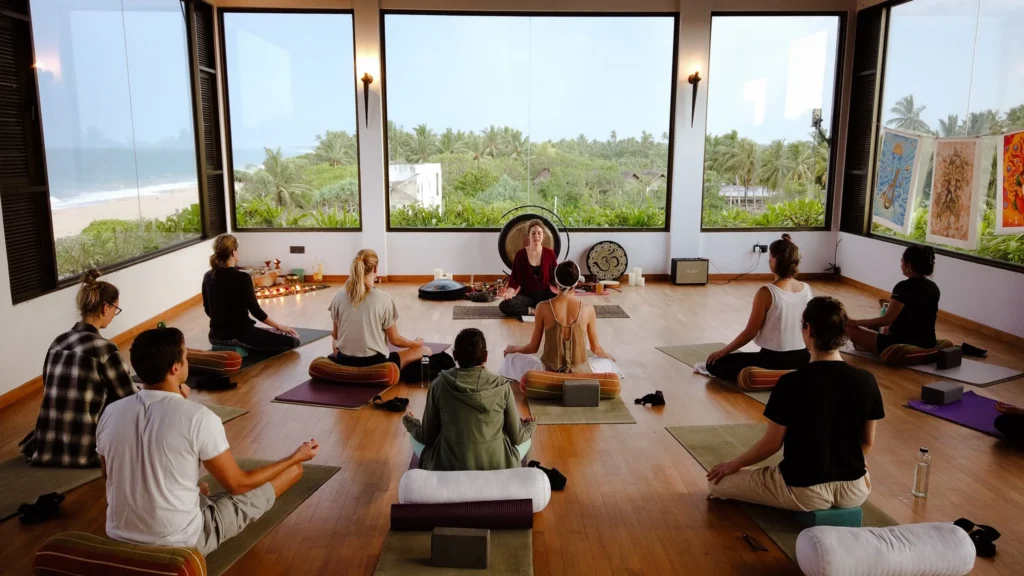
To identify the best meditation retreat options is necessary to analyze the convergence of “Environment,” “Instruction,” and “Intensity.” Excellence in this sector is not a factor of geographic beauty or culinary variety, but rather of “Transmissional Clarity.” A premier center ensures that the technique is taught with such precision that it can be replicated in the chaos of a secular, urban environment long after the retreat concludes.
Multi-Perspective Explanation
From a Neuro-Biological Perspective, these retreats function as “Neural Pruning” events. By removing external input, the brain is forced to process latent “Cognitive Debt,” eventually leading to a reduction in amygdala reactivity and an increase in pre-frontal cortex thickness. Operationally, the value lies in “Noble Silence”—a social contract that eliminates the performance anxiety of interpersonal communication, allowing the nervous system to drop into a state of “Deep Parasympathetic Dominance.” From a Lineage Perspective, a top-tier option is characterized by “Teacher-Student Density,” where access to experienced mentors ensures that the practitioner does not get lost in the psychological “noise” that often arises during extended silence.
Oversimplification Risks
The primary risk in identifying these options is the “Spa-Meditation Hybrid” trap. Many luxury resorts offer “meditation sessions” as an amenity, which lacks the “Sustained Pressure” required for real cognitive shifts. An oversimplified view fails to account for “Intensity Matching.” Forcing a beginner into a 10-day silent Vipassana course can be as psychologically damaging as putting an untrained athlete into a marathon is physically damaging. Furthermore, the “Aesthetic Bias” often leads seekers toward remote monasteries that lack the psychological support systems necessary to handle the “Dark Night of the Soul” or other adverse contemplative outcomes.
Contextual Background: The Evolution of Contemplative Architecture
The history of meditation retreats has moved from the “Solitary Forest Hermitage”—designed for lifelong monastics—to the “Integrated Secular Center” of 2026. Initially, these spaces were inaccessible to the laity, serving as repositories for esoteric knowledge. The 1970s marked the “Westernization of Insight,” as teachers returned from Asia to establish centers like the Insight Meditation Society (IMS) in Massachusetts, stripping away religious dogma while retaining the technical core.
By 2026, we will have entered the era of “Biometric-Assisted Contemplation.” This shift is driven by a realization that “One Size Does Not Fit All.” The leading centers now utilize EEG and HRV (Heart Rate Variability) data to help students understand their “Neural Signature” during practice. This move represents a departure from “Blind Faith” toward “Verification,” where the goal is to provide a quantifiable roadmap for the journey into stillness.
Conceptual Frameworks for Deep Practice
Strategic practitioners use specific mental models to evaluate the “Institutional Fit” of a meditation plan.
1. The “Default Mode Network” (DMN) Model
This framework posits that meditation is the intentional “De-Activation” of the DMN—the part of the brain responsible for rumination, self-referential thought, and “time-traveling” into the past or future. A top retreat provides the “Attentional Anchors” required to keep the DMN offline for extended periods.
2. The “Window of Tolerance” Framework
In this model, the goal of a retreat is to expand the practitioner’s capacity to sit with discomfort (physical or emotional) without “Dissociating” or “Hyper-Arousal.” Success is measured by the body’s “Emotional Resilience” rather than the level of “Peace” achieved.
3. The “Internal Family Systems” (IFS) Logic
Some modern retreats integrate this model, viewing the “Noisy Mind” as a collection of “Protective Parts.” Instead of “Silencing” the mind, the practice becomes one of “Compassionate Inquiry.” This framework is particularly effective for those dealing with “High-Acuity Stress.”
Key Categories of Meditation Retreats and Trade-offs
Identifying the best meditation retreat options involves matching the “Contemplative Maturity” of the individual with the institution’s “Intensity Profile.”
| Category | Primary Focus | Mechanism | Significant Trade-off |
| Traditional Vipassana | Insight/Equanimity. | 10-day silence; scanning. | High physical/mental rigor. |
| Zen Intensive (Sesshin) | Boundless Presence. | Zazen, formal ritual, Koans. | Very rigid structure/posture. |
| Secular Mindfulness | Stress Reduction/Focus. | MBSR-based; psychological. | May lack philosophical depth. |
| Neuro-Meditation | Brain-State Training. | EEG feedback; tech-assisted. | Can feel overly “clinical.” |
| Devotional/Metta | Compassion/Heart. | Loving-kindness; chanting. | Less focus on “Focus” skills. |
| Forest Monasticism | Renunciation/Simplicity. | Living with monastics. | Intense cultural/religious immersion. |
Detailed Real-World Scenarios and Decision Logic

The “High-Cognitive-Load” Professional
A 45-year-old software architect is experiencing “Decision Fatigue” and “Attention Fragmentation.”
-
The Decision Logic: Selection of a “Concentration-First” retreat (Samatha) in a secular setting.
-
Analysis: The guest needs to “Stabilize the Lens” before attempting deep insight work.
-
Outcome: The center provides a “Focus-Anchor” protocol that reduces “Context-Switching” drag by 40% upon return to work.
The “Emotional Blockage” Crisis
An individual dealing with “Suppressed Grief” or “Burnout-Induced Apathy.”
-
The Decision Point: A silent Zen retreat vs. a “Compassion-Focused” (Metta) retreat with group processing.
-
Outcome: Following a Metta-based plan, the individual utilizes “Prospective Empathy” to soften their internal critic, a result that a purely silent Insight retreat might have actually exacerbated.
Planning, Cost, and Resource Dynamics
The “Economic Architecture” of a retreat is determined by “Instructional Density”—the ratio of experienced teachers to students and the level of psychological support provided.
Contemplative Investment Tiers (2026 Estimates)
| Tier | Annual Cost (Est.) | Primary Driver | Service Frequency |
| Professional/Executive | $5,000 – $15,000 | 1:5 Teacher ratio; Private. | 7-day immersive + 6mo follow-up. |
| Non-Profit Flagship | $1,500 – $3,500 | Sliding scale; Large hall. | 10-day intensive. |
| Donation-Based (Dana) | $0 – $1,000 | Volunteer staff: Basic. | 10-day rigorous. |
| Urban Boutique | $500 – $1,500 | Ease of access; Workshops. | Weekend intensive. |
Tools, Strategies, and Support Systems
A definitive strategy for utilizing the best meditation retreat options involves a “Somatic and Psychological Stack”:
-
HRV Biofeedback: To monitor “Autonomic Tone” during sitting and walking meditation.
-
Proper Ergonomics: Using specialized “Seiza” benches or “Zafus” to prevent nerve compression.
-
Digital “Black-Hole” Bags: To eliminate the temptation of “Micro-Checking” devices during the retreat.
-
Noble Silence (The “Social Fast”): Utilizing silence as a tool to starve the “Social Ego” of validation.
-
Intermittent Fasting: Often integrated into traditional retreats (no food after noon) to increase “Mental Acuity” and “Autophagy.”
-
Walking Meditation: Integrating “Proprioceptive Awareness” to ensure the practice is not just a “Head-Only” event.
-
Post-Retreat “Cool-Down” Periods: Scheduling 48 hours of “Buffer Time” before re-entering high-stimulation environments.
Risk Landscape and Failure Modes
The “Taxonomy of Contemplative Risk” includes:
-
The “Spiritual Bypass” Hazard: Using meditation to avoid dealing with underlying psychological trauma or interpersonal conflicts.
-
The “Meditation-Induced Hypomania”: A rare but serious state where the sudden reduction in DMN activity leads to a state of “Inflation” or disorganized thoughts.
-
The “Physical Compensation” Failure: Pushing through knee or back pain to the point of permanent joint damage in the name of “Discipline.”
-
The “Re-Entry Shock” Mode: Returning to a high-stress environment without a transition plan, leading to a “Systemic Crash” within 48 hours.
Governance, Maintenance, and Long-Term Adaptation
A successful retreat is a “Neural Integration” project, not a weekend getaway.
-
The “5-Minute Minimum”: The most effective maintenance plan is the one that survives the busiest day.
-
The “Contextual Trigger”: Associating a specific breath-pattern with a high-stress event (e.g., a “Waiting for Zoom” breath).
-
Governance Checklist:
-
Is the “Integration Mentor” scheduled for a post-retreat check-in?
-
Has the “Environmental Noise” in the home office been minimized?
-
Is the “Daily Sitting” habit supported by a physical “Altar” or dedicated space?
-
Is there a “Refuge Group” (Sangha) for monthly accountability?
-
Measurement, Tracking, and Evaluation
How do you measure the “ROI” of a silent retreat?
-
Leading Indicators: HRV stability; “Time-to-Recovery” after an emotional trigger; focus duration.
-
Qualitative Signals: Reduction in “Reactive Speech”; increased “Internal Space” between a stimulus and a response.
-
Documentation Examples: The “Insight Journal”—a document that captures “Perceptual Shifts” without becoming a narrative diary.
Common Misconceptions and Oversimplifications
-
“Meditation is About Stopping Thoughts”: False. It is about changing your relationship to thoughts—from being “The Actor” to “The Audience.”
-
“I Need a Quiet Place to Meditate”: False. The goal is to develop “Internal Silence” that can be maintained in a noisy subway.
-
“More Silence is Always Better”: False. For some, extreme silence can lead to “Dissociation” rather than “Presence.”
-
“It’s Just Relaxation”: False. Deep meditation can be incredibly “Active” and “Effortful” cognitive training.
-
“I’m Not Good at Meditation Because My Mind Wanders”: False. The “Wandering” is the weight; the “Noticing” is the rep.
-
“It’s a Religious Practice”: In 2026, the mechanics of meditation are understood as “Neural Hygiene” regardless of belief systems.
Ethical and Practical Considerations
In 2026, the primary ethical challenge in the meditation space is “Commoditized Calm.” As corporations integrate mindfulness to increase productivity, the “Liberatory” aspect of the practice is often lost. Choosing a retreat that emphasizes “Ethical Conduct” (Sila) alongside “Focus” (Samadhi) ensures that the peace you find is not just a tool for “Corporate Stamina,” but a foundation for “Human Flourishing.”
Conclusion
The architecture of “Internal Space” is built on “Sustained Attention.” By mastering the selection of the most rigorous and safe contemplative environments, you move from being a “Passenger of Passions” to an “Observer of the Infinite.” The ultimate success of a retreat is not measured by the “Bliss” felt on the cushion, but by the “Clarity” and “Compassion” shown when the silence ends. In 2026, the most effective individual is the one who carries their “Internal Monastery” with them into the noise of the world.