Best Wellness Retreats for Couples: 2026 Relational Reset Guide
The professionalization of shared therapeutic experiences has fundamentally altered how long-term partners approach the concept of a “getaway.” In 2026, the traditional vacation is increasingly viewed as insufficient for addressing the compounded stressors of dual-career households and the fragmentation of attention caused by digital saturation. Instead, a new standard has emerged: the “Relational Reset.” This paradigm shift moves away from passive leisure toward an active, structural intervention designed to synchronize the biological and psychological rhythms of two people simultaneously.
The logistical complexity of a high-end dual-intervention is significant. It requires a delicate balance between individual physiological needs, such as one partner’s requirement for metabolic correction, and the collective need for communication recalibration. Selecting a program is no longer about choosing a scenic backdrop; it is an analytical process of auditing “Interventional Alignment.” The objective is to find an environment that facilitates a “Co-Regulatory State,” where the nervous systems of both individuals are down-regulated in tandem, creating a foundation for profound, long-term stability.
Furthermore, the rise of longevity science has introduced a biometric layer to these experiences. It is no longer uncommon for couples to undergo simultaneous epigenetic testing or shared neurofeedback sessions to map their “Relational Bio-resonance.” This move toward data-driven intimacy marks the maturation of the sector, where the focus is on “Durable Connection” rather than transient romance. This editorial reference serves as a definitive roadmap for navigating this sophisticated landscape, ensuring that the chosen path serves as a high-authority asset for the couple’s collective health.
Understanding “best wellness retreats for couples.”
To identify the best wellness retreats for couples, one must look past the aesthetic tropes of rose petals and infinity pools. In a rigorous editorial and clinical context, excellence is defined by “Dyadic Synchronization.” This refers to the facility’s ability to treat the relationship as a single biological unit while respecting the distinct physiological baselines of each individual.
Multi-Perspective Explanation
From a Neuro-Psychological Perspective, the value of these retreats lies in the “Oxytocin-Cortisol Ratio.” By removing external stressors and domestic logistics, the environment allows for the upregulation of bonding hormones while systematically flushing the system of chronic stress markers. Operationally, the best programs offer “Parallel Customization.” This means Partner A can engage in intensive liver detoxification while Partner B focuses on musculoskeletal rehabilitation, with their schedules intersecting at critical “Connection Nodes” such as shared meditation or nutritional therapy. From a Relational Perspective, the hallmark of a top-tier retreat is “Conflict-Neutral Ground,” providing a safe, professional container to address deep-seated patterns without the “Home-Field” triggers that usually derail progress.
Oversimplification Risks
The primary risk in this sector is the “Hospitality-Wellness Blur.” Many five-star resorts add a “couple’s massage” to their menu and market themselves as a wellness destination. This is a profound oversimplification. A true wellness intervention requires a “Clinical Engine”—staffed by experts in somatic experiencing, nutrition, and functional medicine. Furthermore, there is the “Symmetry Trap,” the assumption that both partners must do the exact same activities. Forcing a high-energy partner into a week of silent meditation can create “Resentment Friction,” which is counterproductive to the goal of relational harmony.
Contextual Background: The Evolution of Shared Healing
The concept of partners seeking health together has moved from the “Thermal Bath Houses” of 19th-century Europe, which were largely gender-segregated social events,s to the “Integrated Bio-Hacking Suites” of 2026. Initially, wellness was an individual pursuit; the spouse was merely an accessory to the travel. In the mid-20th century, the “Spa Hotel” emerged, but it prioritized aesthetics over actual systemic change.
By 2026, we will have entered the era of “Co-Regulated Longevity.” This evolution is driven by the understanding that a partner’s health is the single greatest predictor of one’s own well-being. The leading retreats now offer “Joint Bio-Marker Audits,” recognizing that couples often share the same gut microbiomes, sleep disruptions, and environmental toxic loads. This shift represents the industrialization of “Relational Maintenance,” moving it from the therapist’s couch into a holistic, physiological environment.
Conceptual Frameworks for Relational Health
Strategic couples utilize specific mental models to evaluate the “Functional Integrity” of a retreat plan.
1. The “Nervous System Co-Regulation” Model
This framework posits that in a healthy relationship, the partners act as “Biological Regulators” for each other. A top-tier retreat audits whether the couple’s presence for each other is “Calming” or “Triggering” and provides somatic tools to shift the dynamic toward a shared parasympathetic state.
2. The “Relational Allostatic Load” Framework
Just as individuals carry a load of stress, relationships do too. This model treats the relationship as a “Storage Vessel” for unresolved tension, financial stress, and parenting fatigue. The retreat’s goal is a “Systemic Drain,” emptying the vessel to restore “Relational Elasticity.”
3. The “Attention Sovereignty” Logic
This framework focuses on “Deep Presence.” It asserts that the primary toxin in modern relationships is “Digital Intrusion.” A successful retreat enforces a “Communication Fast,” allowing the couple to reclaim their “Mutual Gaze” and cognitive focus, which is essential for re-establishing intimacy.
Key Categories of Couple-Centric Wellness Plans
Navigating the market involves matching the “Dyadic Need” with the institution’s “Specialization.”
| Category | Primary Benefit | Significant Trade-off | Ideal Use Case |
| Integrative Medical | Joint diagnostics; bio-hacking. | Can feel clinical/non-romantic. | High-stress professionals. |
| Somatic & Tantric | Physical/Sexual intimacy. | High emotional vulnerability. | Re-igniting connection. |
| Adventure & Bond | Shared achievement: dopamine. | Physical injury risk. | Active/Athletic couples. |
| Silent/Meditative | Cognitive de-cluttering. | No verbal communication. | Over-stimulated/Talked-out. |
| Nutritional & Detox | Shared metabolic reset. | Potential “hangry” irritability. | Lifestyle/Health overhaul. |
| Psychological/Therapeutic | Deep emotional clearing. | Very intense; requires stamina. | High-conflict/Crisis-repair. |
Detailed Real-World Scenarios and Decision Logic
The “Fragmented” Dual-Career Couple
A couple in their late 40s, both in executive roles, feeling like “roommates” due to work travel and digital saturation.
-
The Decision Logic: Selection of a “Digital Detox and Somatic Reset” in a remote, high-luxury environment.
-
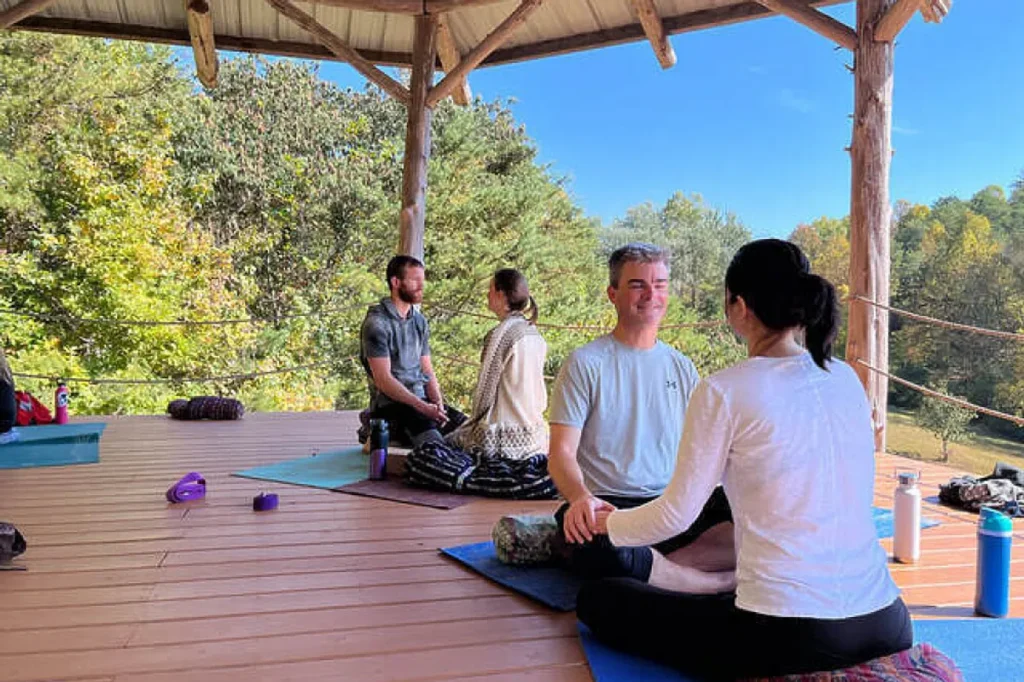
Analysis: The primary “Pathogen” here is the lack of presence. They don’t need more “activities”; they need “Unstructured Silence” and shared somatic work like partner yoga.
-
Outcome: The absence of devices forces a “Neural Re-connection,” allowing the partners to see each other clearly for the first time in years.
The “Biologically Misaligned” Couple
One partner is a fitness enthusiast; the other is dealing with chronic fatigue and metabolic syndrome.
-
The Decision Point: A standard “Fitness Retreat” vs. an “Integrative Medical Center” with parallel tracks.
-
Outcome: They chose the Medical Center. Partner A does high-intensity training while Partner B receives IV nutrient therapy and guided restoration. They meet for “Educational Workshops” on shared longevity.
Planning, Cost, and Resource Dynamics

The “Economic Floor” of a high-end couples’ retreat is determined by the “Total Resource Allocation” for two adults.
Couple’s Wellness Price Tiers (2026 Estimates)
| Tier Level | Daily Rate (Total for 2) | Diagnostic Depth | Primary Feature |
| Ultra-Boutique | $4,000 – $8,000 | Epigenetic/Neuro-mapping. | 2:1 Staff ratio; Private villa. |
| Premium Integrative | $2,500 – $4,500 | Standard Blood/Metabolic. | Professional clinicians. |
| Boutique Holistic | $1,200 – $2,200 | Subjective assessment. | High-end somatic guides. |
| Self-Directed Plus | $600 – $1,100 | None. | Facilities: Yoga/Meditation. |
Tools, Strategies, and Support Systems
A rigorous vetting strategy requires a “Validation Stack” to ensure the retreat is “Relationship-Safe”:
-
The “Parallel Scheduling” Audit: Ensuring the facility can handle two distinct schedules that still allow for 4-6 hours of shared “Connection Time.”
-
Shared Biometric Dashboards: Some 2026 retreats offer apps where couples can see their “Sleep Synchronization” or “Shared Stress Recovery” scores.
-
The “Conflict Container” Check: Verifying that there is a certified relational therapist on call in case deep work triggers an acute argument.
-
Partner Breathwork: Utilizing specific “Co-Breathing” techniques to synchronize heart rates during somatic sessions.
-
Sensory Deprivation for Two: High-end centers now offer “Float Tanks” designed for couples to experience weightlessness and silence together.
-
Nutritional Sovereignty: Ensuring the menu can accommodate one partner’s “Keto” needs and the other’s “Plant-Based” requirements without social friction.
-
Post-Retreat “Integration” Blueprint: A 30-day plan provided by the facility to help the couple maintain their “New Baseline” at home.
Risk Landscape and Failure Modes
The “Taxonomy of Relational Wellness Risk” includes:
-
The “Asymmetric Progress” Failure: One partner dives deep and transforms, while the other remains resistant, creating a “Growth Gap” that increases friction.
-
The “Crisis Trigger” Mode: A wellness activity (like a breathwork session) releases a repressed trauma that the facility isn’t equipped to handle, leading to an emotional “Blow-up.”
-
The “Comparison Trap”: Partners comparing their progress or “Biometric Scores,” turning a healing journey into a competition.
-
The “Vacation Illusion”: Mistaking the “Easy Peace” of a tropical resort for actual structural change in the relationship.
Governance, Maintenance, and Long-Term Adaptation
A successful stay is a “Longitudinal Investment.”
-
The “First 72-Hour” Rule: Avoid returning to high-stress social obligations immediately. Schedule “Buffer Days” at home.
-
The “Shared Ritual” Strategy: Taking one specific practice from the retreat (e.g., a 10-minute morning meditation) and making it a non-negotiable part of the domestic routine.
-
Governance Checklist:
-
Has the “Shared Vision Statement” been drafted?
-
Is the “Digital-Free Bedroom” policy enforced?
-
Have we scheduled our “6-Month Relational Audit”?
-
Is the “Somatic Toolkit” (breathwork/touch) being used weekly?
-
Measurement, Tracking, and Evaluation
How do you quantify “Relational ROI”?
-
Leading Indicators: “Shared Sleep Efficiency”; frequency of “Curious Inquiry” vs. “Defensive Reaction.”
-
Qualitative Signals: A reduction in “Tone-of-Voice” sharpness; an increase in spontaneous physical touch.
-
Documentation Examples: The “Relational Ledger”—a log of “Mutual Wins” and “Systemic Repairs” achieved during the retreat.
Common Misconceptions and Oversimplifications
-
“It’s Just a Romantic Holiday”: False. Romance is a byproduct; “Systemic Regulation” is the goal.
-
“We Have to Do Everything Together”: False. Over-dependence during a retreat can lead to “Enmeshment” and stifle individual growth.
-
“It Will Save a Broken Marriage”: False. A retreat is a “Catalyst,” but it requires a foundation of “Mutual Intent” to work.
-
“Health is Individual”: False. Partners share a “Bio-Environment”; you cannot be truly healthy if your partner is in a state of chronic inflammation.
-
“We Don’t Need a Professional Guide”: False. A third-party “Neutral Expert” is essential for breaking habitual communication loops.
-
“Luxury Means Quality”: False. High-thread-count sheets do not equal high-quality clinical oversight.
Ethical and Practical Considerations
In 2026, the primary ethical challenge is “Relational Privacy.” As retreats collect more biometric data on couples, the question of “Data Sovereignty” becomes paramount. Practically, couples must consider the “Ecological Impact” of their travel. Choosing a retreat that utilizes “Regenerative Farming” for its menu and respects the “Local Cultural Fabric” aligns the couple’s personal healing with the health of the planet.
Conclusion
The architecture of a shared life is built on “Somatic and Emotional Alignment.” By navigating the landscape of the best wellness retreats for couples with an analytical and intentional mind, partners can secure a “Relational Asset” that pays dividends for decades. Success is not found in the silence of the retreat, but in the “Resilient Harmony” that persists when the noise of the world returns. Ultimately, the greatest wellness tool is the presence of a regulated, healthy, and attentive partner.