
Best Spiritual Retreat Plans: 2026 Existential Wisdom Guide
The institutionalization of the “search for meaning” has undergone a profound structural shift as the mid-2020s witness a global decoupling of spirituality from traditional religious hegemony. In 2026, the pursuit of a “transcendental reset” is no longer viewed as a fringe or exclusively ascetic endeavor; it has matured into a sophisticated psychological and existential intervention. As individuals grapple with “Ontological Fatigue,” a state of exhaustion stemming from the relentless digital fragmentation of the self, demand for structured environments that facilitate deep internal inquiry has reached a critical point.
Selecting an environment for spiritual labor is an exercise in “Existential Risk Management.” It is a calculated withdrawal from the noise of the “Attention Economy” to enter a space designed for “Noetic Clarity.” The primary challenge for the modern seeker is navigating a market saturated with “Lifestyle Spirituality,” where the trappings of a retreat—the incense, the aesthetics, the remote locations—often mask a lack of “Interventional Depth.” A failure to distinguish between a “Comfort-First” resort and a “Transformation-Oriented” sanctuary leads to a transient experience rather than a permanent shift in one’s “Existential Baseline.”
Furthermore, integrating contemplative neuroscience into traditional practices has introduced a layer of technical rigor that requires a new vocabulary. We are no longer merely discussing “faith” or “enlightenment”; we are auditing “Phenomenological States,” “Neural Coherence,” and “Cognitive Decoupling.” This maturation of the field reflects a broader societal realization: that a well-governed interior life is the only viable defense against a world of increasing complexity and instability. This editorial reference provides the intellectual scaffolding required to evaluate the diverse offerings in the global landscape and establish a definitive path toward genuine interiority.
Understanding “best spiritual retreat plans.”
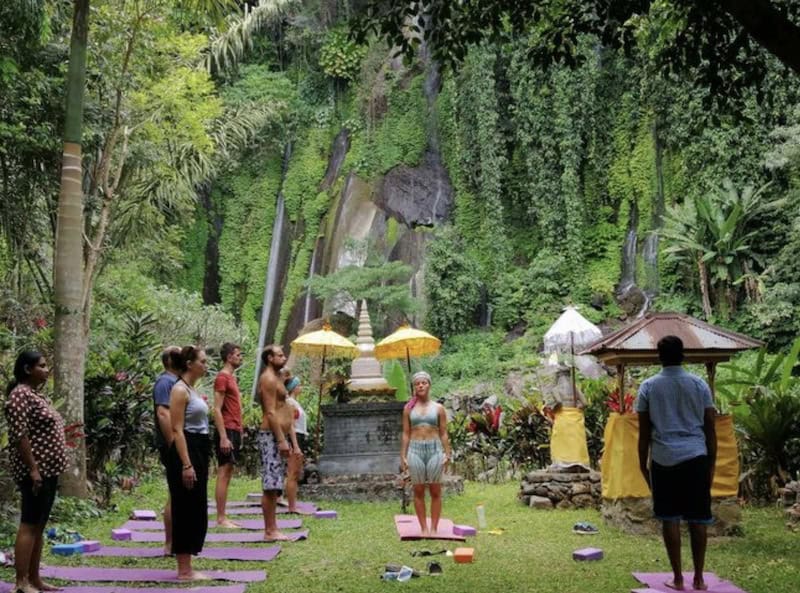
To identify the best spiritual retreat plans is to move beyond the reductive view that spirituality is a synonym for “peace of mind.” In a professional and analytical context, a spiritual plan is a “Metaphysical Protocol.” It acknowledges that human flourishing requires more than psychological health; it requires a coherent relationship with the “Whole”—whether that is defined through a specific theistic lens, a pan-psychic framework, or a secular humanistic commitment to depth.
Multi-Perspective Explanation
From a Phenomenological Perspective, these plans are characterized by “Intentional Disruption.” They seek to break the habitual patterns of thought and perception that constitute our everyday “egoic” experience. Operationally, the value lies in “Environmental Sanctity,” the creation of a space where the usual social and professional hierarchies are suspended, allowing for what anthropologists call “Liminality,” a state of being “betwixt and between.” From a Developmental Perspective, the hallmark of an elite plan is “Vertical Growth,” the movement toward higher stages of complexity and compassion rather than just horizontal “State-Chasing” (seeking temporary high-intensity feelings).
Oversimplification Risks
The most significant risk in the current market is “The Commodification of Presence.” A facility may offer “Spiritual Yoga” or “Sacred Sound Baths,” but if these are not embedded in a rigorous pedagogical framework, they remain mere “Experience Products.” An oversimplified view fails to distinguish between “Spiritual Bypassing” using spiritual concepts to avoid dealing with psychological trauma, and “Spiritual Integration.” Furthermore, the “Exoticism Bias” often leads individuals to believe that a retreat is only valid if it involves a long-distance flight to an Eastern monastery, ignoring the “Instructional Quality” available in more accessible, localized traditions.
Contextual Background: From Asceticism to Integrative Insight
The history of the spiritual retreat has evolved from the “Desert Monasticism” of the early centuries—where the goal was radical isolation and bodily mortification—to the “Integrative Insight” models of 2026. Historically, these spaces were reserved for the “Virtuosos of the Spirit,” the monks and nuns who dedicated their entire lives to the practice.
By the late 20th century, the “Ecumenical Movement” and the rise of “Globalized Wisdom” allowed laypeople to access these intensive environments. Today, we have entered the era of “Secular Transcendence,” where individuals of all backgrounds seek the “Cognitive and Emotional Dividends” of deep contemplation. This shift reflects a move away from “Dogmatic Adherence” toward “Empirical Subjectivity”—the idea that spiritual truths should be verified through direct, first-person experience.
Conceptual Frameworks for Interior Auditing
Strategic seekers use specific mental models to evaluate the “Structural Integrity” of a spiritual program.
1. The “Ego-to-Eco” Transition Model
This framework assesses whether a plan successfully shifts the individual from a “Self-Centric” perspective (the ego) to a “System-Centric” perspective (the eco). A successful retreat should lead to a measurable increase in “Pro-Social Orientation” and ecological connectivity.
2. The “State-vs-Stage” Framework
Borrowing from integral theory, this model posits that temporary “States” of bliss or clarity are less important than permanent “Stages” of developmental maturity. The evaluator must audit whether the retreat provides the “Scaffolding” necessary to stabilize the insights gained during the stay.
3. The “Via Negativa” (The Way of Removal)
This logic asserts that spiritual growth happens not by adding new beliefs, but by removing the “Obscurations”—the biases, distractions, and attachments—that cloud our natural awareness. A plan that focuses on “De-cluttering the Mind” is often more resilient than one that provides a new set of dogmas.
Key Categories of Spiritual Interventions and Trade-offs
Identifying the ideal environment requires an audit of “Ontological Bias.”
| Category | Primary Mechanism | Significant Trade-off | Ideal Use Case |
| Silent Contemplative | Prolonged Silence; Solitude. | Can trigger deep loneliness. | Interior auditing: Clarity. |
| Nature-Centered | Wilderness Immersion. | Physically demanding. | Inter-connectedness; Awe. |
| Service-Based | Altruism; Labor. | Less time for meditation. | Ego-reduction; Purpose. |
| Lineage-Traditional | Scriptural Study; Ritual. | Requires “Entry-Level” Faith. | Cultural Depth; Community. |
| Somatic-Sacred | Breath; Movement; Chanting. | Can be overly “Emotional.” | Trauma-release; Vitality. |
| Modern Secular | Philosophy; Ethics; Science. | Lacks “Ancient” Gravitas. | Intellectual Rigor; Logic. |
Detailed Real-World Scenarios and Decision Logic
The “Existential Burnout” Executive
A 50-year-old who has achieved material success but feels a profound sense of “Meaninglessness.”
-
The Decision Logic: Selection of a “Service-Based” or “Nature-Centered” plan.
-
Analysis: More “Silent Meditation” might lead to more circular thinking. They need a “Decentering” event—something that forces them to engage with something larger than their own career.
-
Outcome: The individual finds a “Systemic Purpose” by working in a remote community, shifting their “Identity Anchor” from “Acquisition” to “Contribution.”
The “Emotionally Turbulent” Seeker
An individual experiencing a “Spiritual Emergency” is characterized by sudden, overwhelming insights or sensory sensitivity.
-
The Decision Point: A “High-Intensity Somatic” retreat vs. a “Stable Lineage-Traditional” plan.
-
Outcome: They chose the Traditional plan. High-intensity breathwork or movement could be “Destabilizing.” They need the “Grounding Presence” of an established tradition with experienced elders to help them integrate their experiences safely.
Planning, Cost, and Resource Dynamics
The “Economic Reality” of spiritual work is that “Space and Time” are the ultimate luxuries.
Spiritual Resource Tiers (2026 Estimates)
| Tier Level | Weekly Cost (Est.) | Teacher Quality | Facility Focus |
| Traditional Ashram | $150 – $600 | Lineage-holder/Monastic. | Austere; Community-run. |
| Boutique Sanctuary | $3,500 – $7,000 | Experienced Lay-Teachers. | Private, Aesthetic, Comfortable. |
| Elite Wisdom Hub | $10,000 – $20,000 | World-class Scholars/MDs. | Clinical Grade; High Tech. |
| The Hermitage | $0 – $300 | Self-guided. | Total Solitude; Off-grid. |
Tools, Strategies, and Support Systems
A rigorous strategy for “Spiritual Maintenance” involves a “Metaphysical and Somatic Stack”:
-
Sacred Texts & Wisdom Literature: The use of “Primary Sources” rather than contemporary summaries to provide intellectual depth.
-
Ritual Continuity: The use of small, repeatable daily actions (e.g., lighting a candle, specific morning recitation) to maintain the “Sacred/Profane” boundary.
-
Spiritual Direction (Mentorship): Regular 1-on-1 sessions with an “Elder” to prevent “Egoic Inflation” or “Spiritual Delusion.”
-
Somatic Anchoring: Using specific postures or objects (rosaries, malas) to bring the mind back to the present moment.
-
The “Inner Journal”: A record not of events, but of “Interior Shifts,” focusing on patterns of resistance and moments of “Opening.”
-
Community (Sangha): Engagement with a group of peers who provide “Social Accountability” for the spiritual practice.
-
Pilgrimage Logic: The use of “Physical Movement” toward a destination as a metaphor for the “Interior Journey.”
Risk Landscape and Failure Modes
The “Taxonomy of Spiritual Risk” includes:
-
The “Guru-Complex” Hazard: Entrusting one’s “Existential Sovereignty” to a charismatic leader who lacks ethical accountability.
-
The “Spiritual Narcissism” Mode: Using spiritual insights to feel “superior” to those who are not on the “path,” creating a new, more subtle ego.
-
The “Depersonalization” Risk: Pushing certain practices (like “No-Self”) too far, leading to a loss of the ability to function in daily life.
-
The “Short-Termism” Failure: Believing that a 10-day retreat has “Solved” a life-long existential crisis, leading to a crash when the “Afterglow” fades.
Governance, Maintenance, and Long-Term Adaptation
A successful stay is a “Metabolic Shift” in how one processes life.
-
The “Sunday Sabbatical” Rule: Dedicating one day a week to the “Retreat Mindset”—no digital devices, no professional labor, only “Depth-Work.”
-
The “Annual Audit” Strategy: Returning to a “Silent Environment” for at least 72 hours every year to check for “Drift” in one’s core values.
-
Governance Checklist:
-
Has the “Morning Sanctuary” time (minimum 20 mins) been established?
-
Is there a “Wise Counsel” (mentor/friend) available for monthly check-ins?
-
Are “Consumption Habits” (media/food/purchases) aligned with retreat insights?
-
Is there a “Crisis Plan” for when life feels “Small” or “Meaningless” again?
-
Measurement, Tracking, and Evaluation
How do you measure the “Evolution of the Soul”?
-
Leading Indicators: “Latency of Forgiveness” (how fast you let go of slights); “Compassionate Response” frequency; “Equanimity” in the face of chaos.
-
Qualitative Signals: A reduction in “Existential Anxiety”; an increase in “Spontaneous Joy”; the disappearance of the “Need to Prove One’s Worth.”
-
Documentation Examples: The “Value-Alignment Log”—a monthly review comparing one’s “Stated Values” against one’s “Actual Time and Resource Expenditure.”
Common Misconceptions and Oversimplifications
-
“Spiritual is Soft”: False. Genuine spiritual work is the “Hardest Labor” a human can perform; it requires facing the “Shadow” without flinching.
-
“It’s About Escaping Reality”: False. It’s about “Piercing Illusions” to see reality more clearly.
-
“You Must Join a Religion”: False. Religion is the “Container”; Spirituality is the “Content.” You can have the latter without the former.
-
“The Best Teachers are the Most Famous”: False. Wisdom is often found in the “Quiet Corners” of the world, away from the spotlight.
-
“You Can Buy Enlightenment”: False. You can buy “Access” and “Environment,” but the “Labor” must be done by you.
-
“It’s Only for ‘Good’ People”: False. Spiritual retreats are for the “Broken” and the “Searching.”
Ethical and Practical Considerations
In 2026, the primary ethical challenge is “Wisdom Appropriation.” As the best spiritual retreat plans often draw from ancient indigenous or Eastern lineages, the question of “Reciprocity” and “Respect” is paramount. Practically, an individual must consider “Economic Integrity.” A plan that puts one in debt is not spiritual; it is a distraction. True depth should lead to “Simplicity” and “Resourcefulness,” not “Consumption.”
Conclusion
The architecture of a meaningful life is built on “Ontological Honesty.” By approaching the selection of a spiritual intensive with an analytical and editorial mind, the individual ensures that their “Existential Investment” leads to a permanent shift in “Character” and “Wisdom.” Success in 2026 is found in the “Internal Resilience” that allows one to remain centered in a world of radical change. Ultimately, the best retreat is the one that allows the seeker to return to the world as a “Presence of Clarity”—capable of navigating life with patience, judgment, and intellectual honesty.