Top Spiritual Retreats in America: The 2026 Authority Reference
The modern American spiritual landscape has undergone a profound structural reorganization, moving from the periphery of institutional religion to a central role in the architecture of psychological and cognitive health. As the “Attention Economy” reaches saturation, the pursuit of silence and existential clarity has transitioned from a niche ascetic practice to a critical, interventionist necessity. By 2026, the demand for “Deep Work” of the soul has given rise to a sophisticated ecosystem of sanctuaries that prioritize ontological depth over mere aesthetic relaxation.
Selecting from the diverse landscape of contemplative environments requires an analytical understanding of what constitutes a “high-authority” intervention. It is no longer sufficient for a facility to provide a scenic backdrop and a set of generic mindfulness instructions; the contemporary seeker requires a rigorous pedagogical framework that can successfully decouple the nervous system from digital velocity. This pivot toward “Precision Spirituality” reflects a maturing society that views internal governance as a prerequisite for external leadership.
To navigate this market effectively, one must move beyond the “Consumer” role and adopt the stance of a “Contemplative Auditor.” This involves an interrogation of the underlying lineages, the integrity of the instructional staff, and the facility’s ability to maintain a “Controlled Sensory Environment.” This article provides the structural framework necessary to evaluate the top spiritual retreats in America, ensuring that the pursuit of existential clarity is treated as a strategic investment in human sovereignty rather than a fragmented series of leisure activities.
Understanding “top spiritual retreats in America.”
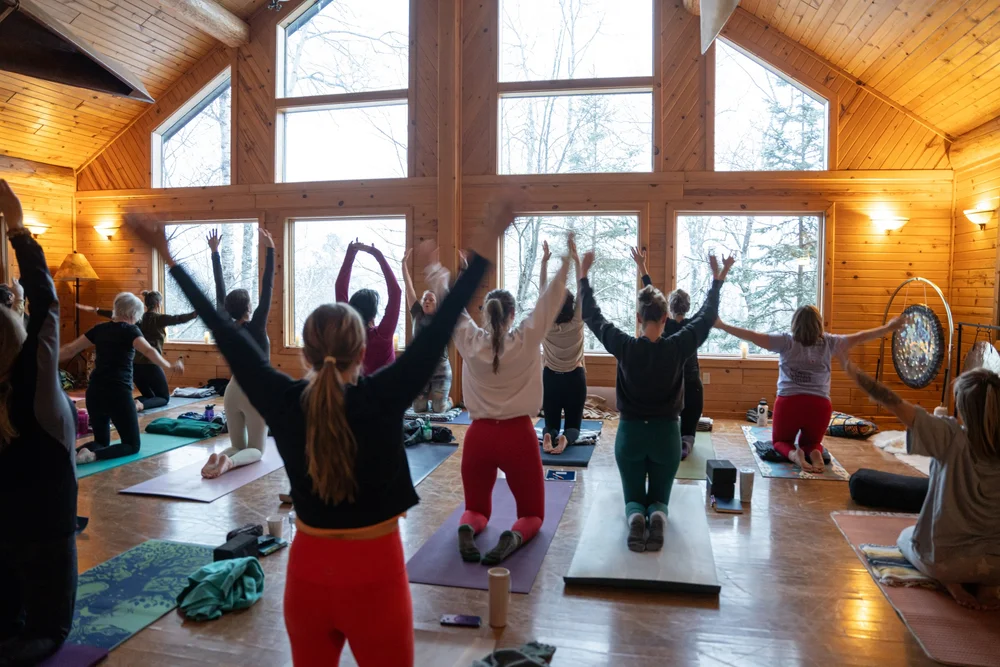
To categorize the top spiritual retreats in America is to engage with a multi-layered taxonomy of human consciousness. In a professional editorial context, “Top” is not a superlative of comfort; it is a metric of “Pedagogical Integrity.” It describes a facility’s ability to facilitate a measurable, sustainable shift in a participant’s cognitive and existential baseline.
Multi-Perspective Explanation
From a Neurological Perspective, the elite American experiences are those that trigger significant “Cortical Thickening” and “Amygdala Down-regulation” through sustained silence and contemplative focus. From a Philosophical Perspective, the focus is on “Authentic Lineage,” prioritizing centers that maintain the integrity of their root traditions, be they Zen, Benedictine, or Indigenous,s while adapting to Western secular needs. From a Logistical Perspective, the market is defined by “Sensory Containment,” where the physical architecture of the high-desert silence of New Mexico or the forested isolation of the Pacific Northwest is utilized as an active agent in the deepening of the meditative state.
Oversimplification Risks
The primary risk for the seeker is the “Wellness Blur,” the assumption that a luxury resort offering a morning yoga class and a sound bath provides the same interventional depth as a 10-day silent intensive. Furthermore, the “Dogmatic Trap” often leads individuals to assume that spiritual depth requires religious conversion. In reality, the highest-authority centers in 2026 operate on a “Trans-sectarian” model, providing universal tools for consciousness without requiring adherence to a specific deity or creed.
Contextual Background: From Counter-Culture to Contemplative Standard
The trajectory of spiritual retreats in the United States has moved from the peripheral mysticism of the mid-20th century to the center of the performance and mental health landscape. Historically, the transmission began with key figures in the 1950s and 60s who brought Eastern contemplative technologies to the West, followed by the “Monastic Renaissance” where former Catholic seminaries were repurposed for lay practitioners.
By the 2020s, we entered the era of “Functional Contemplation.” We are no longer debating whether spiritual practice has utility; we are instead refining which specific protocols (e.g., Compassion Cultivation vs. Open Awareness) are most effective for specific psychological profiles. The rise of centers like the Insight Meditation Society (IMS) and the Esalen Institute established a new American tradition of the “Silent Intensive,” creating a bridge between ancient wisdom and 21st-century neuro-diagnostics.
Conceptual Frameworks and Mental Models for Discernment
Strategic selection of an experience requires a mental model that bypasses marketing descriptions to reveal the underlying utility of the protocol.
1. The “Dose-Response” Curve of Silence
This model suggests that the benefits of a retreat are non-linear. A three-day retreat often only clears the “Surface Noise,” while the deep “Neuro-Psychological Restructuring” typically begins after day five of total silence. Understanding where you are on this curve is vital for managing expectations.
2. The “Active vs. Passive” Spectrum
Some experiences utilize an “Active Focus” (e.g., Mantra or Visualization). Others emphasize “Passive Observation” (e.g., Shikantaza or Vipassana). The choice depends on whether the participant needs a “Primary Object” to stabilize a chaotic mind or “Open Space” to investigate the nature of thoughts.
3. The “Institutional Integrity” Matrix
This evaluates the retreat’s governance. Is the teaching staff supervised by a board? Is there a clear ethics protocol? High-authority retreats provide a “Safe Container” where the psychological labor of spiritual work can occur without fear of predatory behavior or institutional negligence.
Key Categories of American Spiritual Retreats
| Category | Primary Philosophy | Significant Trade-off | Ideal Candidate |
| Monastic Immersion | Benedictine/Catholic/Buddhist. | Dogmatic friction vs. Lineage. | Seekers of historical depth. |
| Silent Insight (Vipassana) | Radical self-observation. | High intensity vs. Clarity. | Those seeking deep ego-work. |
| Human Potential (Esalen) | Gestalt/Somatic/Holistic. | Social noise vs. Breadth. | Creatives and social pioneers. |
| Indigenous/Earth-Based | Nature-connected ritual. | Climatic exposure vs. Grounding. | Nature-starved urbanites. |
| High-Tech Contemplative | Neurofeedback-assisted. | Clinical feel vs. Soulfulness. | Engineers/Data-driven pros. |
| Secular Mindfulness | Evidence-based SR. | “Corporate” tone vs. Safety. | Beginners and high-stress execs. |
Detailed Real-World Scenarios and Decision Logic
The “Decision-Fatigued” Leader
A CEO in the middle of a major merger is experiencing “Cognitive Locking.”
-
The Decision Logic: Opting for a 10-day Silent Vipassana retreat (e.g., Spirit Rock).
-
Analysis: The leader needs a “Pattern Break” so that total that work-thoughts cannot survive. The lack of eye contact, reading, or writing forces a “Hard Reboot” of the executive function.
-
Outcome: Recovery of “Strategic Perspective” through forced cognitive isolation.
The “Existential Crossroads”
An individual transitioning out of a 20-year career feels a loss of “Core Identity.”
-
The Decision Point: A wilderness-based vision quest or an Earth-based retreat (e.g., Animas Valley Institute).
-
Failure Mode: Choosing a luxury urban spa.
-
Analysis: Transition requires “Liminality.” The physical removal from civilization and the engagement with the natural world act as a rite of passage that an urban spa cannot replicate.
Planning, Cost, and Resource Dynamics
The “Economic Architecture” of spiritual retreats varies from “Dana-Based” (donation) centers to high-luxury institutes.
American Spiritual Retreat Investment Tiers (2026)
| Tier | Investment (Weekly) | Primary Resource | Operational Context |
| Dana/Monastic | $0 – $700 (Donation) | Simple lodging; Group work. | High authenticity; Low luxury. |
| Educational/Secular | $1,500 – $3,500 | Professional teachers; Rooms. | Structured learning; Comfortable. |
| Luxury/Boutique | $6,000 – $12,000+ | Private villas; Lab testing. | “White-glove” service; High tech. |
| Solo-Hermitage | $150 – $400 (Daily) | Total seclusion; Food drop. | Advanced self-directed practice. |
Tools, Strategies, and Support Systems
To maximize the ROI of the top spiritual retreats in America, practitioners should deploy a “Systemic Stack”:
-
The “Pre-Retreat” Taper: 14 days before arrival, reducing caffeine, sugar, and screen time by 50% to prevent “Withdrawal Headaches.”
-
Analog “Capture” Protocol: Using a physical journal to record “Insight Patterns” only once a day to avoid turning the experience into a “Work Project.”
-
The “Integration Buffer”: Blocking 48 hours of “Blank Space” in the calendar post-retreat to prevent “Nervous System Whiplash.”
-
Somatic Grounding: Utilizing simple physical movements (walking, stretching) to anchor psychological insights in the body.
-
Community “Sangha” Connection: Identifying a local group before the retreat to provide “Social Accountability” for the post-retreat habit.
-
The “Slow-Entry” Logic: Starting with a 2-day retreat before attempting a 10-day intensive.
Risk Landscape and Failure Modes
-
The “Spiritual Bypass”: Using meditation to ignore genuine psychological trauma rather than seeking professional therapy.
-
“Makyo” (Hallucinations): In intensive retreats, the brain may generate “Visual Noise.” Without a skilled teacher, these can be misinterpreted as “Enlightenment” rather than neurological side-effects.
-
Functional Dissociation: Research suggests that 3-10% of retreat participants may experience lasting anxiety or “Depersonalization.” Screening for a history of psychosis is a “Non-Negotiable” for high-authority centers.
Governance, Maintenance, and Long-Term Adaptation
A retreat is not a destination; it is a “Calibration Event.”
-
The “30-Day Audit”: Evaluating if the “Reactive Trigger” (e.g., email anxiety) has returned to pre-retreat levels.
-
Trigger-Based Returns: If “Cognitive Tunneling” (obsessive focus) persists for more than a week, it is a trigger for a 24-hour “Day of Silence.”
-
Checklist for Long-Term Adaptation:
-
Is my “Sacred Space” at home 100% tech-free?
-
Am I practicing at least 20 minutes daily for neuroplasticity?
-
Do I have an “Emergency Teacher” or mentor for destabilizing insights?
-
Measurement, Tracking, and Evaluation
Efficacy is measured by “Leakage into Life.”
-
Leading Indicators: Heart Rate Variability (HRV) stability; improved “Sleep Latency”; increased “Social Patience.”
-
Documentation Examples:
-
Behavioral Trace: Recording the reduction in “Impulsive Phone Checks.”
-
Affective Log: A weekly rating of “Subjective Peace” versus “Reactive Stress.”
-
Common Misconceptions and Oversimplifications
-
“It’s a Vacation”: Corrected: It is a form of mental training that can be strenuous.
-
“I Can’t Meditate Because My Mind is Too Busy”: Corrected: A busy mind is the input for the work, not a disqualifier.
-
“You Must Be Religious”: Corrected: The majority of top spiritual retreats in America are secular or trans-sectarian.
-
“Guided Apps are the Same as Retreats”: Corrected: Apps are “Vitamins”; retreats are “Surgery.”
-
“The Goal is a Blank Mind”: Corrected: The goal is “Meta-Awareness,” seeing thoughts without being controlled by them.
-
“It’s Self-Indulgent”: Corrected: Regulating your nervous system is a pro-social act that prevents you from projecting stress onto others.
Conclusion
The pursuit of spiritual depth through retreats reflects a maturing American society that is beginning to value “Internal Infrastructure” as much as external achievement. By engaging with these sanctuaries through an analytical and disciplined lens, the seeker moves beyond the “Wellness Trend” into the realm of “Cognitive Sovereignty.” The ultimate success of a spiritual practice is found in the quality of attention one brings to the noise of the world. As we move further into 2026, the ability to “Self-Regulate” in a chaotic environment will be the definitive marker of a high-performance, well-lived life.