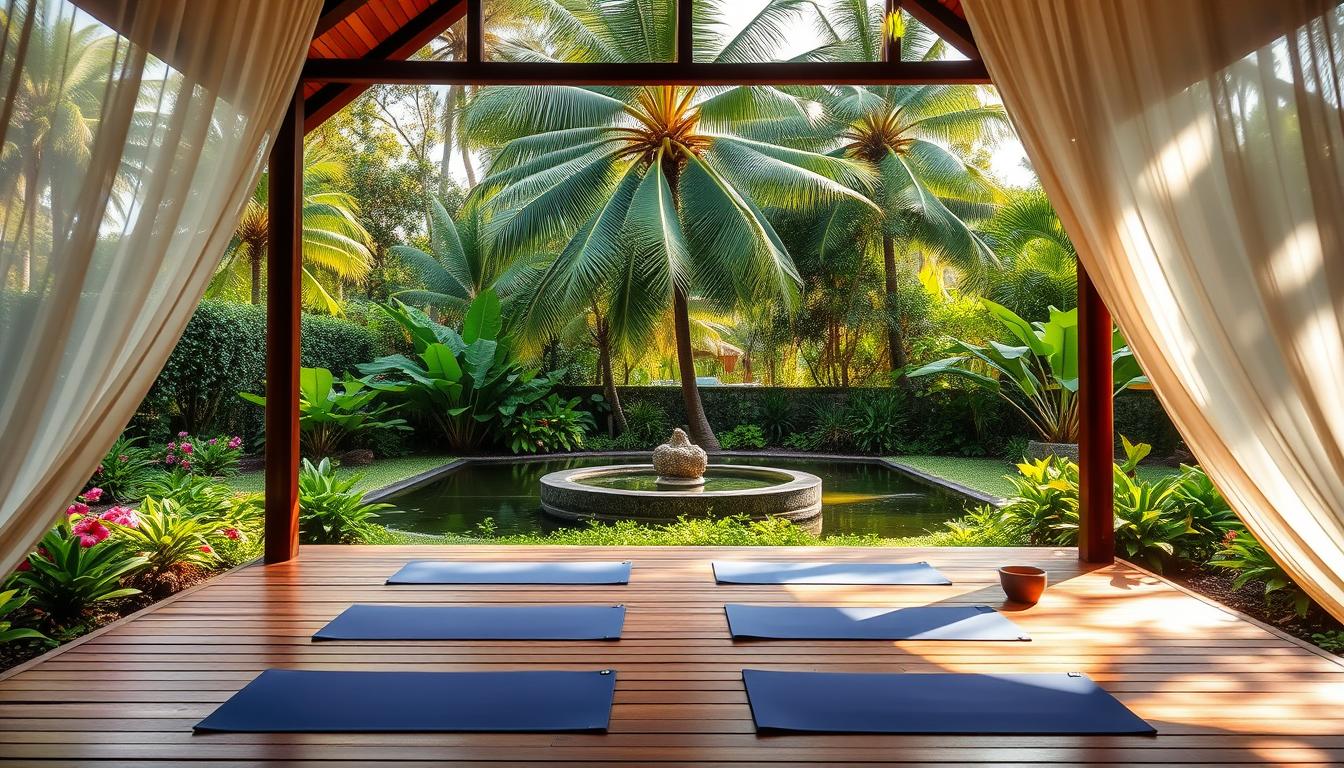
Luxury Yoga Retreats USA: The 2026 Editorial Reference
The contemporary intersection of ancient somatic practice and high-tier hospitality has moved beyond the “spa-centric” models of the late twentieth century. In its place, a sophisticated discipline of systemic restoration has emerged, where yoga is no longer treated as a supplemental activity but as the core architectural element of a cognitive and physical reset. For the discerning individual, the quest for a sanctuary in 2026 is an exercise in “Environmental Control”—the intentional selection of a geography and a pedagogical lineage that can successfully decouple the nervous system from the relentless velocity of professional and digital life.
This evolution reflects a broader cultural pivot toward “Precision Wellness.” In the American landscape, the distinction between a standard getaway and a flagship retreat is defined by the depth of “Interventional Integrity.” It is not merely about the thread count of the linens or the organic provenance of the cuisine, though these are baseline expectations; rather, it is about the facility’s ability to manage the interface between traditional Vedantic philosophy and modern neuro-biological recovery. To navigate this market requires a move from passive consumption to an analytical auditing of a retreat’s underlying governing logic.
The pursuit of luxury yoga retreats USA is, at its heart, a pursuit of “Internal Sovereignty.” These environments are designed to act as “Biological Safe-Havens,” where the practitioner can explore the boundaries of their physical capacity and mental clarity without the friction of logistical stressors. This editorial reference provides the intellectual scaffolding required to synthesize these variables into a robust protective strategy for one’s well-being, ensuring that the choice of a retreat serves as a high-yield investment in long-term vitality rather than a fleeting experiential distraction.
Understanding “luxury yoga retreats usa”
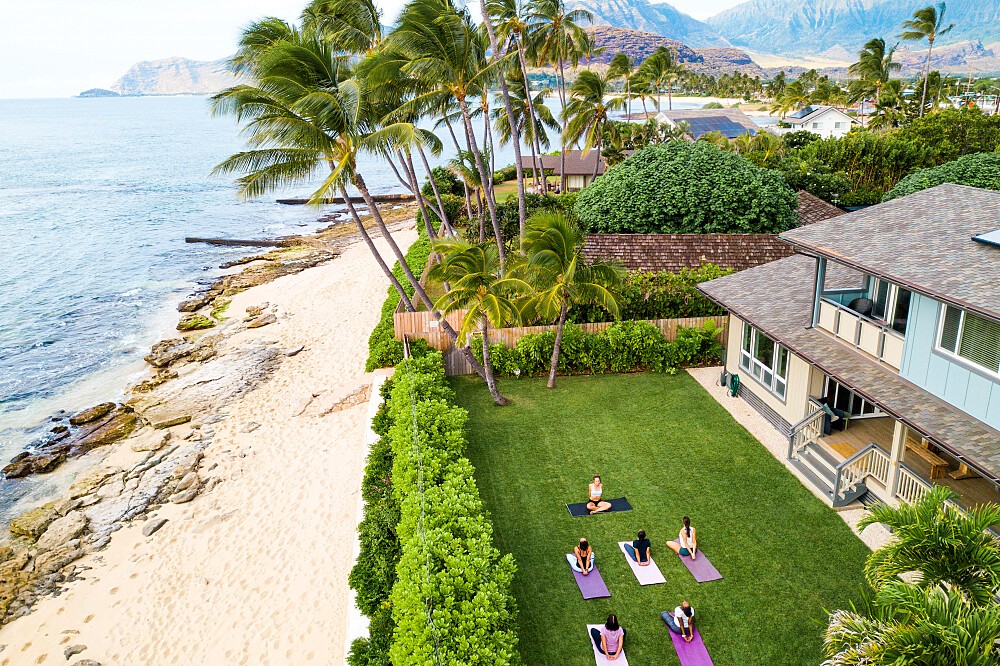
To categorize the luxury yoga retreats usa is to engage with a multi-layered taxonomy of health and self-governance. In a professional editorial context, “Luxury” is not a superlative of excess; it is a metric of “Atmospheric Purity” and “Staff-to-Student Ratio.” It describes a facility’s ability to provide a personalized, frictionless environment where the practitioner’s primary task is internal observation.
Multi-Perspective Explanation
From a Physiological Perspective, luxury is defined by “Bio-Regional Alignment”—the use of the local climate, altitude, and natural mineral resources to enhance the effects of asana and pranayama. From a Pedagogical Perspective, it involves access to “High-Authority Lineage,” prioritizing retreats led by instructors who possess deep philosophical training rather than just a certificate in physical fitness. From a Logistical Perspective, it requires “Total Sensory Containment,” where the acoustic, thermal, and visual environments are engineered to prevent “Stimulus Leakage” from the outside world.
Oversimplification Risks
A frequent error in this sector is the “Aesthetic Trap”—assuming that a beautiful Instagram presence equates to deep somatic instruction. A retreat may offer a stunning infinity pool while providing only surface-level, “Power-Flow” classes that exacerbate the “Hurry-Sickness” the practitioner intended to heal. Furthermore, the “All-Inclusive” fallacy can be deceptive; if the schedule is too crowded, it prevents the necessary “Integration Time” where the real benefits of yoga take root in the nervous system.
Contextual Background: The Evolution of the American Ashram
The trajectory of yoga in America has shifted from the counter-culture enclaves of the 1960s to the “Longevity Clinics” of 2026. Historically, the movement was defined by an “Ascetic Ideal,” where spiritual depth was often associated with physical hardship. This changed in the 1990s as yoga entered the mainstream wellness market, leading to a period of “Mass-Market Dilution.”
By 2026, we will have entered the era of the “Scientific Synthesis.” The modern flagship retreat now utilizes “Somatic Architecture”—buildings specifically designed to facilitate different types of yoga, from “Heat-Optimized” studios for Vinyasa to “Acoustically-Dead” chambers for meditation. This evolution reflects a broader trend toward “Precision Somatics,” where yoga is utilized as a specific tool for “Nervous System Governance.”
Conceptual Frameworks for Evaluative Discernment
Strategic selection of a retreat requires mental models that bypass marketing copy to reveal the underlying utility of the experience.
1. The “Veda-Biology” Matrix
This model evaluates how well a retreat balances “Traditional Philosophy” with “Modern Science.” A high-tier retreat might combine ancient Ayurvedic dietary protocols with modern blood-glucose monitoring to ensure that the physical practice is supported by metabolic stability.
2. The “Structure-Fluidity” Spectrum
This framework assesses whether a retreat utilizes a “Monastic Schedule” (fixed times for everything) or “Intuitive Programming” (choose your own path). The choice depends on whether the practitioner needs to “De-load” from a chaotic life (Structure) or “Re-connect” with their own internal timing (Fluidity).
3. The “Signal-to-Noise” Ratio in Instruction
This evaluates the “Density of Insight.” High-luxury retreats focus on “High-Signal” instruction—individual postural adjustments, breath-work science, and philosophical context—rather than “High-Noise” repetitive sequences that offer no long-term skill acquisition.
Key Categories and Jurisdictional Variations
The American landscape offers diverse “Climatic Interventions” that dictate the tone of the retreat.
| Category | Primary Philosophy | Significant Trade-off | Strategic Utility |
| High-Desert (AZ/UT) | Aridity & Stillness. | Dehydration risk vs. Clarity. | Mental de-cluttering. |
| Coastal (CA/FL) | Fluidity & Vitality. | Humidity vs. Sensory Awakening. | Physical rejuvenation. |
| Mountain (CO/MT) | Resilience & Altitude. | Hypoxia risk vs. Fortitude. | Metabolic & Cardiovascular reset. |
| Forest (NY/OR) | Grounding & Biophilia. | Seasonal damp vs. Calm. | Nervous system recovery. |
| Urban Sanctuary | High-efficiency recovery. | Ambient noise vs. Access. | Short-term recalibration. |
Detailed Real-World Scenarios and Decision Logic
The “Chronic Stress” Recovery
A 40-year-old litigation attorney is experiencing “Hyper-Vigilance” and shallow breathing.
-
The Decision Logic: Choosing a “Restorative-Focus” retreat in the Hudson Valley over a “Power-Yoga” beach camp.
-
Analysis: The litigation attorney’s nervous system is already overtaxed. High-intensity yoga would only add “Mechanical Stress.” A forest-based restorative retreat provides the “Parasympathetic On-ramp” needed for true recovery.
-
Outcome: The attorney learns to down-regulate their heart rate through pranayama, a skill that translates directly back to the courtroom.
The “Physical Plateau”
A long-term practitioner feels their body has become “Stagnant” in their home practice.
-
The Decision Point: A “Technical-Alignment” intensive in the desert.
-
Failure Mode: Choosing a “Relaxation-Only” spa.
-
Analysis: Plateaus are broken by “Precision.” The practitioner needs high-level instruction that corrects latent postural imbalances.
-
Outcome: Sustained physical evolution through “Advanced Proprioception.”
Planning, Cost, and Resource Dynamics
The “Economic Reality” of luxury yoga is that “Uninterrupted Attention” from an expert is the most expensive commodity.
Luxury Yoga Investment Tiers (2026 Estimates)
| Tier | Weekly Investment | Primary Value Driver | Operational Context |
| The Boutique | $3,500 – $6,000. | Small groups (10-15). | High-quality community. |
| The Flagship | $8,000 – $15,000. | Private villas; 1:1 sessions. | Radical personal reset. |
| The Private | $20,000+. | Total seclusion; Custom team. | Elite/High-Profile needs. |
| The Urban Day | $500 – $1,000. | Accessibility; Tech-enabled. | Acute symptom relief. |
Tools, Strategies, and Support Systems
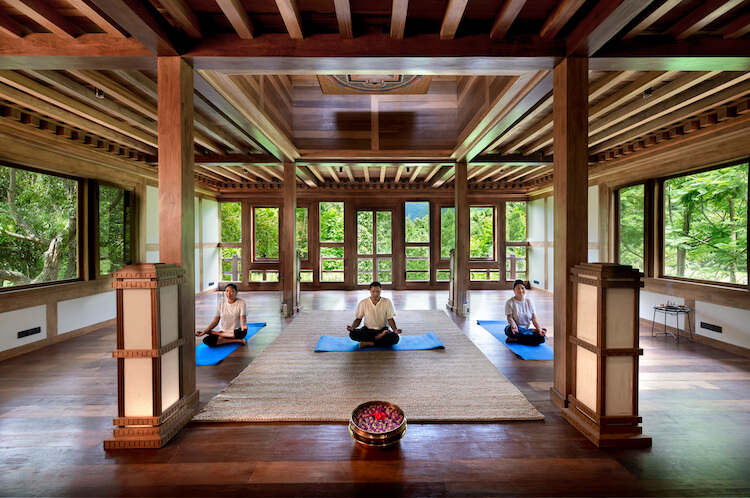
To maximize the ROI of the luxury yoga retreats uUSA a practitioner should deploy a “Systemic Stack”:
-
The “Pre-Arrival” Taper: Reducing caffeine and screen-time 7 days before arrival to prevent “Detox-Headaches” from interfering with the first 48 hours.
-
Analog Journaling: Using a physical notebook to record “Somatic Insights”—the specific physical sensations that occur during practice—which are often lost when using digital devices.
-
The “Proprioceptive” Audit: Requesting a 1:1 postural assessment on Day 1 to identify the “Primary Compensations” your body makes during the day (e.g., “tech-neck”).
-
Bilingual Anatomy Charts: If the instructor uses Sanskrit terms, having a basic understanding of the “Anatomical Triggers” associated with each asana (e.g., psoas release).
-
The “Post-Retreat” Buffer: Scheduling a “Zero-Day” at home before returning to work to allow the “Neurological Gains” of the retreat to solidify.
-
Bio-Metric Tracking: Using a wearable to monitor Heart Rate Variability (HRV) as a lagging indicator of how well your body is responding to the specific type of yoga offered.
Risk Landscape and Failure Modes
-
The “Spiritual-Bypass” Mode: Using the luxury environment to ignore genuine psychological issues rather than using the silence to investigate them.
-
The “Over-Extension” Syndrome: Attempting advanced poses for the “Aesthetic” of the retreat and suffering a soft-tissue injury that prevents further practice.
-
The “Contextual-Mismatch”: Selecting a “Silence-Required” retreat when you are actually in need of “Social-Connection,” leading to a sense of isolation rather than peace.
Governance, Maintenance, and Long-Term Adaptation
A luxury retreat is a “Calibration Event,” not a “Cure.”
-
The “90-Day Habit Review”: Assessing which 15-minute practice from the retreat has survived the return to home life. If zero, the retreat was merely a vacation.
-
Adjustment Triggers: If your “Sleep-Latency” (time to fall asleep) increases for more than three days, it is a trigger to deploy the specific breathing protocol learned at the retreat.
-
Checklist for Long-Term Vitality:
-
Is my “Sacred Space” at home still free of digital clutter?
-
Am I practicing “Ujjayi” breath during high-stress emails?
-
Have I scheduled my “Quarterly Calibration” (Mini-Retreat)?
-
Measurement, Tracking, and Evaluation
How do you measure the efficacy of a high-end yoga experience?
-
Leading Indicators: “Minutes of Stillness” achieved per day; “Degree of Hip Mobility” improved; “Respiratory Rate” at rest.
-
Qualitative Signals: A shift from “Reactive Behavior” to “Proactive Response” in professional conflicts; a reduction in “Background Cognitive Noise.”
-
Documentation Examples: The “Somatic Report”—a quarterly summary of your physical and mental baselines compared to your “Retreat-High.”
Common Misconceptions and Oversimplifications
-
“Luxury Yoga is Just for the Flexible”: False. Luxury instruction is about “Adapting the Yoga to the Body,” not the reverse.
-
“It’s Only About Stretching”: False. Yoga is a “Neurological Training” system that happens to use the body as its medium.
-
“More Sweat Means a Better Practice”: False. High-end Yin or Restorative yoga can be more physiologically demanding for a stressed mind than a hot-flow class.
-
“I Need a Year of Experience First”: False. A luxury retreat is the best place to start because the high teacher-to-student ratio prevents the formation of bad habits.
-
“It’s Self-Indulgent”: False. Managing your own “Nervous System Health” makes you a more effective and less reactive leader/partner.
-
“Yoga is a Religion”: False. While it has spiritual roots, the modern luxury retreat focuses on “Functional Wellness” and “Universal Philosophy.”
Conclusion
The architecture of a well-lived life requires periodic withdrawals into environments of “High-Integrity Silence.” By engaging with the luxury yoga retreats USA as institutional partners in your long-term health governance, you move beyond the “Sick-Care” cycle into a state of “Sovereign Flourishing.” Success in 2026 is found in the “Analytical Patience” to choose a sanctuary that treats your body not as a machine to be driven, but as a system to be tuned. Ultimately, the best retreat is the one that equips you with the “Internal Sanctuary” required to remain composed in an uncomposed world.